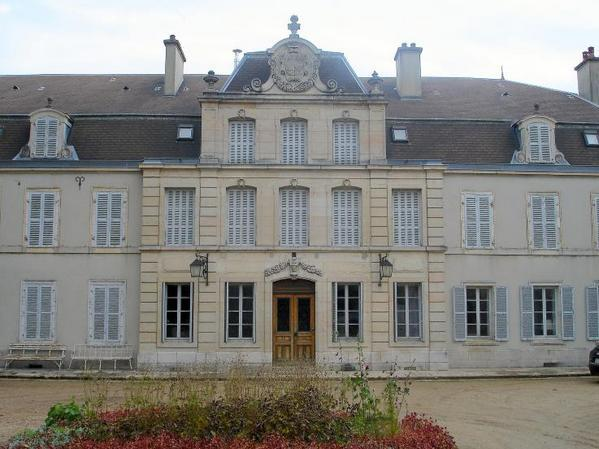
Les Petits Monts is a small 3.67 hectare Premier Cru vineyard in Vosne-Romanée that lies above Richebourg. Facing east, northeast from elevations ranging between 280 and 340 meters, the soil is quite rocky. The origin of the name is straightforward and suggests only the size (petit=small) of the hill on which the vineyard is situated.
Archive for the ‘Burgundy’ Category
Vineyard Description: Vosne-Romanée, LES PETITS MONTS, Premier Cru
Posted in Appellations, Burgundy, Vineyards, Wine on March 27, 2010| Leave a Comment »
Vineyard Description: Vosne-Romanée, AUX BRÛLEES, Premier Cru
Posted in Appellations, Burgundy, Vineyards, Wine on March 27, 2010| Leave a Comment »
Aux Brûlees is a 4.53 hectare Premier Cru vineyard in Vosne-Romanée that lies just to the north of Les Veroilles ou Richebourgs. Facing south from an elevation averaging 280 meters, the soil is mostly hard limestone. The origin of the vineyard name, which means burnt in French, is consistent with the hot, southern exposure. Alternatively, it could suggest that the vineyard was originally burned as a means of clearing it for viticulture.
Vineyard Description: Vosne-Romanée, LES SUCHOTS, Premier Cru
Posted in Appellations, Burgundy, Vineyards, Wine on March 27, 2010| 3 Comments »
Les Suchots is a 1.62 hectare Premier Cru vineyard in Vosne-Romanée that lies immediately north and level with Romanée-St-Vivant. The elevation of Les Suchots ranges between 250 meters and 270 meters. Facing east southeast, the topsoil is deep and very rich in clay and lies over a base of limestone. The etymology of Suchots likely relates to a regional slang word for hillock.
Fine examples of Les Suchots are produced by Sylvain Cathiard, Louis-Michel Liger-Belair and Robert Arnoux.
Vineyard Description: Vosne-Romanée, AUX REIGNOTS, Premier Cru
Posted in Appellations, Burgundy, Vineyards, Wine on March 27, 2010| Leave a Comment »
Aux Reignots is a small 1.62-hectare Premier Cru vineyard in Vosne-Romanée that lies on a steep 15% slope above iconic Grands Crus La Romanée, La Tâche, and La Romanée-Conti. The elevation of Aux Reignots ranges between 280 and 320 meters with an exposition toward the east. This vineyard has a very sandy topsoil over a limestone base.
Many connoisseurs contend that Aux Reignots, along with Aux Malconsorts, consistently produces Grand Cru level wine. Superb examples of Aux Reignots derive from Domaine du Comte Liger-Belair and Domaine Sylvain Cathiard.
Vineyard Description: Flagey-Echézeaux, ECHÉZEAUX, Grand Cru
Posted in Appellations, Burgundy, Vineyards, Wine, tagged Domaine du Comte Liger-Belair on March 27, 2010| Leave a Comment »
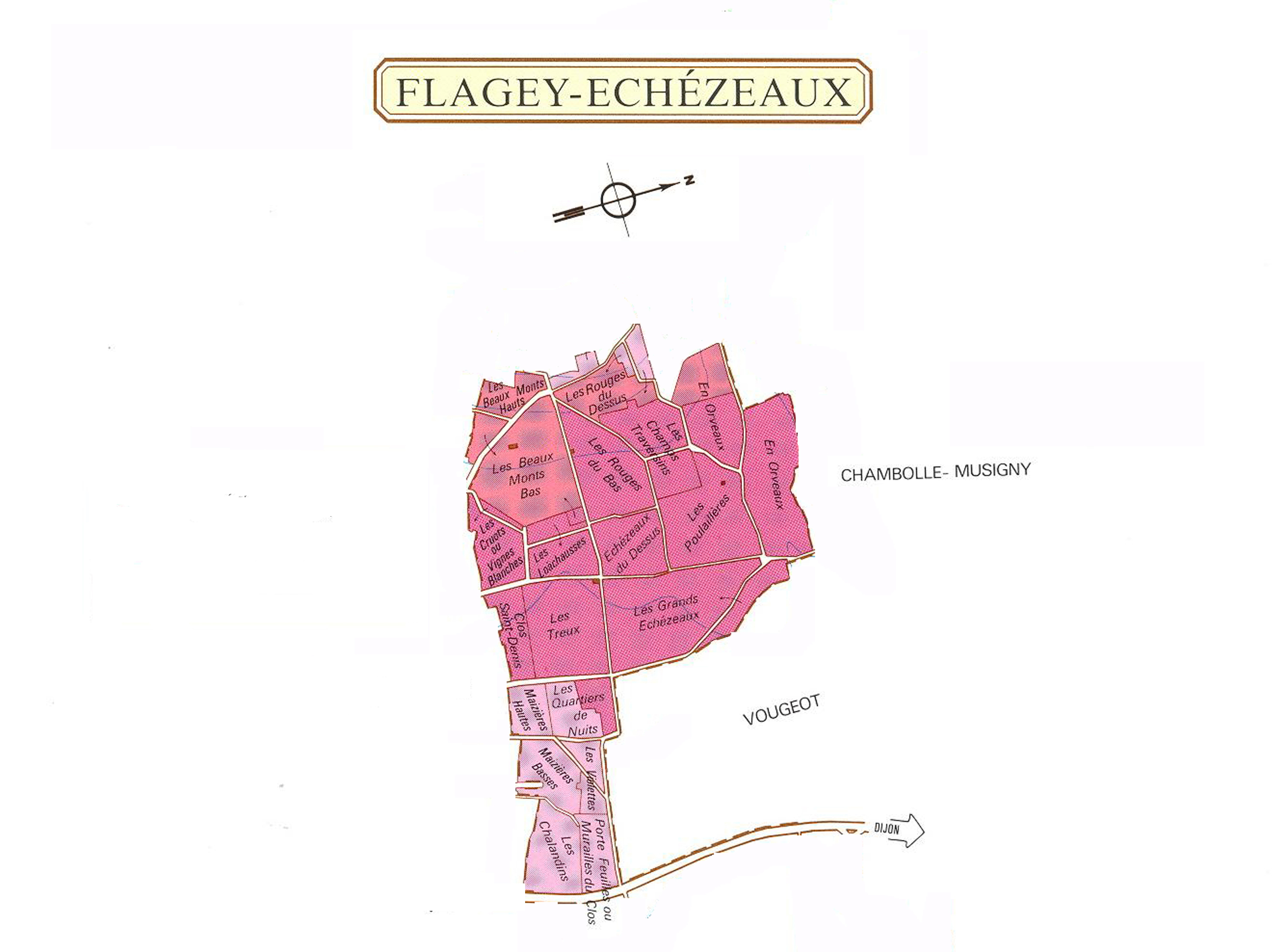
Echézeaux is a 37.69 hectare Grand Cru vineyard situated in the commune of Flagey-Echézeaux (which is viticulturally joined with Vosne-Romanée). It lies upslope of the Clos de Vougeot and wraps around Grands-Echézeaux on the latter’s southern and western sides; and is bordered by Chambolle-Musigny on its north. One of the largest Grand Cru vineyards in Burgundy, Echézeaux is itself comprised of different lieux-dits: En Orveaux, Les Champs Traversins, Les Poulaillères, Les Rouges-du-Bas, Les Echezeaux-du-Dessus, Les Loachausses, Les Criots-en-Vignes-Blanches, Clos St-Denis, Les Treux, Les Quartiers de Nuits
The name “Echézeaux” derives ultimately from the Latin casalis meaning a rural house. Casalis was Gallicized to chesal which was pluralized into chesaux. In time, les chesaux became Echézeaux. The ealiest mention in official records was in 1287. The vineyard was acquired by the Abbot of Citeaux in 1353, in exchange for 3 livres tournois (“Tour pounds”) plus some vineyards in Chambolle.
Echézeaux faces east from an elevation that reaches 300 meters at the top and 260 meters down below. The slope varies from 10% at the base to 13% at the top. The soil, not surprisingly for such a large vineyard, varies significantly. In general, the base is Bajocian limestone and the soil is silty with considerable gravel and rocks. At the lower and flatter elevation, the soil is richer with a higher component of clay.
Domaine du Comte Liger-Belair has two parcels of Echézeaux, the first a .4 ha. piece in Les Criots-en-Vignes-Blanches, and the second a .2 ha piece in Les Champs Traversins.
Vineyard Description: Vosne-Romanée, LA ROMANÉE, Grand Cru
Posted in Appellations, Burgundy, Vineyards, Wine, tagged Comte Liger-Belair, Domaine de la Romanée-Conti, Gaston Roupnel, La Tache, Louis-Michel Liger-Belair, Romanée-Conti, Vosne-Romanée on March 27, 2010| Leave a Comment »
La Romanée, Grand Cru: This diminutive .85 ha. Grand Cru climat in Vosne-Romanée is the smallest Grand Cru in the Côte-d’Or and the smallest appellation contrôlée in France. Arguably one of the finest vineyards in France, the poet Gaston Roupnel extolled La Romanée as “La perle du milieu dans le collier bourguignon“ (loosely, “the central jewel of the Burgundian necklace”). It lies just to the west and uphill from La Romanée-Conti, to the south of Les Richebourgs and to the north of La Grande Rue. It was originally a part of La Romanée-Conti, belonging to the Croonenbourg family from the Fifteenth Century until it was partitioned off in 1760 and sold to the Prince de Conti. A monopole, La Romanée has belonged to the Liger-Belair family since 1815. It was the only major vineyard retained by the family when the remainder of its holdings were auctioned off in the 1930’s. Facing east, the vineyard lies on a steep 16% slope at an elevation of about 280 meters. The subsoil is friable Prémeaux limestone; the topsoil is a sandy-clay mixed with pebbles. Under the skilled and sensitive direction of Louis-Michel Liger-Belair, the wines of La Romanée are said once again to rival in quality the iconic vineyards, La Tâche, and La Romanée-Conti.
Appellation Profile: Vosne-Romanée and Flagey-Echézeaux
Posted in Appellations, Burgundy, Wine, tagged Ann Gros, Burgundy, Comte Liger-Belair, Domaine de la Romanée-Conti, Gerard Mugneret, Jean Grivot, Leroy, Louis-Michel Liger-Belair, Meo-Camuzet, Sylvain Cathiard on March 25, 2010| 7 Comments »

Vosne-Romanée is a French wine appellation that produces some of the finest red Burgundy . Wine so labeled must come from vines planted in the commune of Vosne-Romanée (or the adjoining commune of Flagey-Echézeaux with which it is viticulturally joined) situated in the Côte de Nuits region of the Côte-d’Or department in Burgundy in eastern France.
Just as Burgundy supplies the benchmark against which all other Pinot Noir is judged, so does the commune of Vosne-Romanée manifest the apotheosis of Burgundy. While there are of course great vineyards found in other communes (one need only mention Musigny to make this point), Vosne-Romanée consistently provide the greatest proportion of the finest red Burgundy.
According to tradition, local Gauls drafted by Caesar into the Roman army were later rewarded with the grant of vineyards in the area, known accordingly as “Romanée”. The village of Vosne, known as early as 639 A.D. as “Vaona,” was apparently derived from a latin word for forest. By the 9th century, much of Vosne belonged to a Cluniac priory named in honor of St. Vivant. By the 13th century, however, the vineyards came to be controlled by the Abbot of Cîteaux. In fact, the last Abbot of Cîteaux died in Vosne in 1797.
The twinned communes of Vosne-Romanée and Flagey-Echézeaux are located east of the Route National (“RN”) 74, between Vougeot to the north and Nuits-Saint-Georges to the south. Out of a total 0f 230.06 hectares of vines in both communes, there are 74.68 hectares of Grands Crus: La Romanée-Conti (1.82 hectares), La Romanée (.85 hectare), La Tâche (6.10 hectares), Grands Echézeaux (9.14 hectares), La Grande Rue (1.65 hectares), Romanée St-Vivant (9.44 hectares) , Richebourg (8 hectares) , and Echézeaux (37.69 hectares). There are also 56.61 of Premier Cru vineyards, including Les Beaux Monts (11.39 hectares), Aux Brûlées (4.53 hectares), Les Chaumes (6.46 hectares), Clos des Réas (2.12 hectares), La Croix Rameau (.60 hectare) Cros Parentoux (1.01 hectares), Au dessus des Malconsorts (1.08 hectares), Les Gaudichots (1.03 hectares), Aux Malconsorts (5.86 hectares) , En Orveaux (1.79 hectares), Les Petits Monts (3.67 hectares), Aux Reignots ((1.62 hectares), Les Rouges (2.62 hectares), and Les Suchots (13.08 hectares). There are also 98.77 hectares of village-level Vosne-Romanée

The village-level vineyards are mainly found east of the town along the Route Nationale, although there are also a few uphill on the western boundary of the commune. The grands crus and premiers crus are situated in a central belt extending the length of the commune, west of the village. The soil is comprised mostly of clay-limestone mixture over a limestone base; the surface is covered with loose pebbles and decomposed limestone. The exposition is east and southeast, at an elevation of between 220m and 340m.
There are many fine producers in the appellation, but the most celebrated and expensive continues to be the historic Domaine de la Romanée-Conti. Although high reputations are also still enjoyed by Domaines Leroy, Meo-Camuzet, and Jean Grivot, the consensus of critics today (Clive Coates, Allen Meadows, John Gilman, Jancis Robinson) seems to accord highest praise to Comte Liger-Belair and Sylvain Cathiard. Other noteworthy vignerons include Anne Gros and Gerard Mugneret.
Profile: Domaine du COMTE LIGER-BELAIR
Posted in Burgundy, Domaines, Wine, tagged Burgundy, Henri Jayer, Louis-Michel Liger-Belair, Vosne-Romanée on March 25, 2010| Leave a Comment »
The careers that young children envision for themselves often more closely reflect their cultural milieu than any noteworthy aptitude. Once upon a time in America’s innocence, nearly every eight-year old boy (regardless of hand-eye coordination) dreamed of playing major league baseball. By the 1960’s, with the Space Race in full throttle, the prevailing boyhood ambition – even for those who got queasy in elevators — was to be an astronaut. What, then, does it say about a community when an eight-year old aristocrat, scion of a celebrated French military family, announces to his father that he plans to become a winemaker?
Unlike millions of baseball players and astronauts manqués, Louis-Michel Liger-Belair completed the path to his youthful dream. Fortunately for the worldwide community of wine lovers, Louis-Michel possessed at once the artistic talent, scientific ability, and intellectual determination to realize his ambition. The consensus of wine critics is that he today, from his base in Vosne-Romanée, produces some of finest expressions of Pinot Noir.
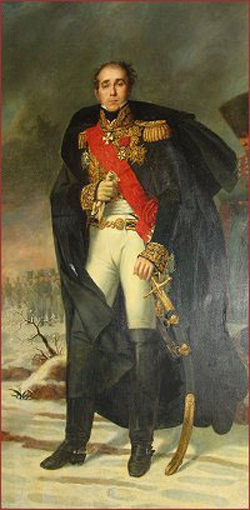
Gen. Louis Liger-Belair
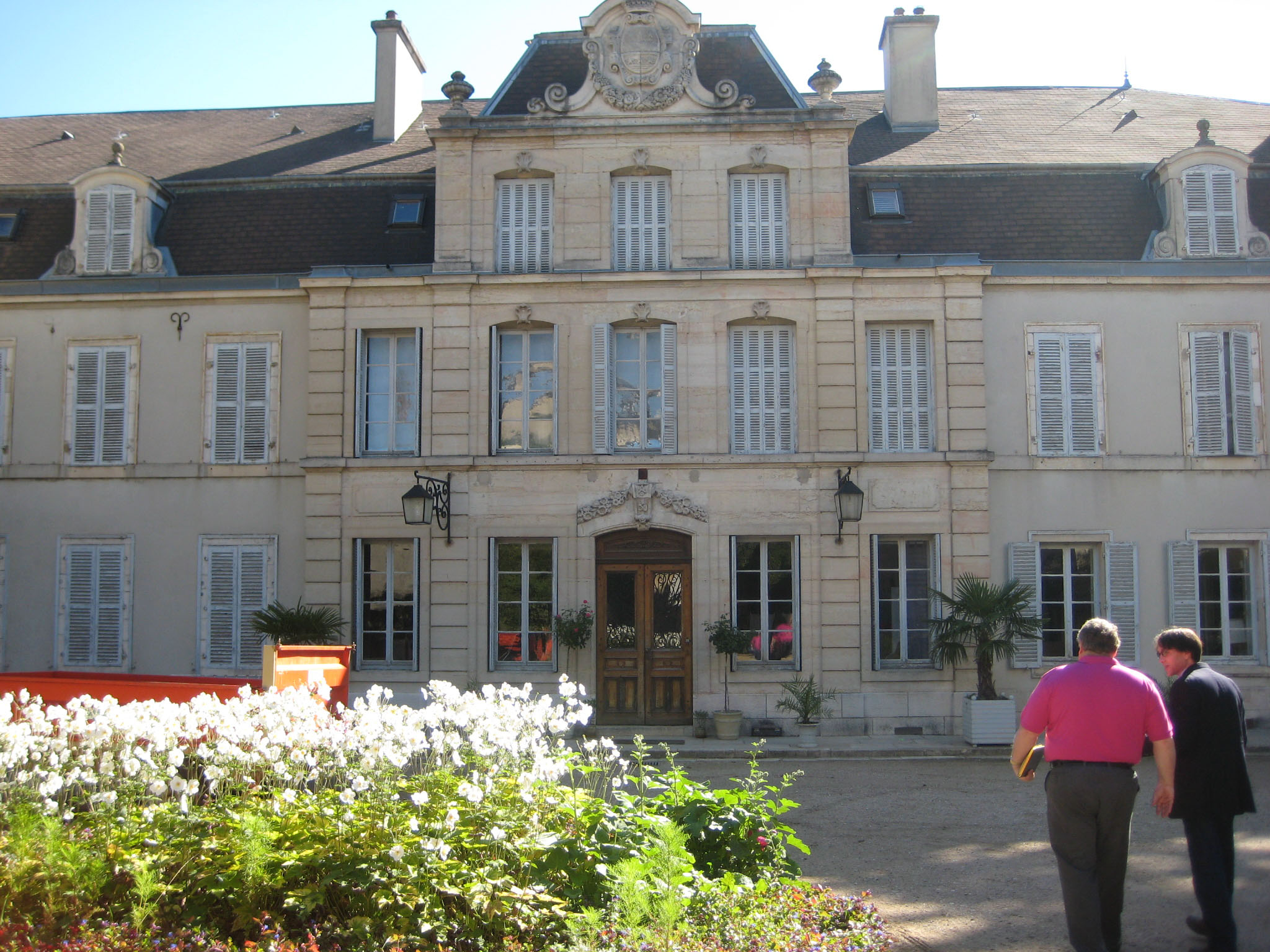
In pursuit of his dream, Louis-Michel benefited from the patrimony of the Château de Vosne-Romanée, and adjoining vineyards, which descended from his lineal forbearer and Napoleonic general, Louis Liger-Belair. In fact, by mid-nineteenth century, the Liger-Belair vineyards comprised over 60 hectares, including the entirety of La Romanée, La Tâche, and La Grande Rue; the preponderence of Malconsorts; one-third of Clos de Vougeot, significant holdings of Chambertin, Richebourg and Echezaux, as well as parcels of Les Chaumes, Les Reignots, Les Brulées, Les Suchots ; Les Saint Georges and Les Vaucrains. Nevertheless, his ancestors had merely been the patron, presiding over Domaine. Louis-Michel would become the first of his family actually to serve as viticulturalist and winemaker.
When Louis-Michel had first announced his career goal to his father Henri, a distinguished general officer, the astonished general had preconditioned his paternal consent on prior completion of engineering studies. In addition, Henri called upon his good friend, the legendary Henri Jayer, to tutor Louis-Michel in some of the arts of winemaking.
Domaine Liger-Belair is presently composed of twelve appellations, comprising 5.53 hectares, situated in the communes of Vosne-Romanée, Flagey-Echézeaux, and Nuits-St-Georges. These include the monopole Grand Cru La Romanée (.84 ha.), and a parcel of Grand Cru Echézeaux (.6 ha.); a most impressive lineup of Vosne-Romanée, Premiers Crus — Aux Reignots (.75 ha), Les Suchots (.22 ha) , Aux Brûlees (.12 ha) , Les Petits Monts (.13 ha), Les Chaumes (.12 ha); 3 parcels of village-level Vosne-Romanée, totaling 2.26 hectares, including the monopole lieu-dit Clos du Château (.83 ha.) , the lieu-dit La Colombière (.78 ha.), and a third village-leval parcel of .65 hectares ; together with two parcels of Nuits-St-Georges, the one a parcel of Premier Cru Les Cras (.37 ha.) and the other a parcel of the lieu-dit Les Lavières (.13 ha.).
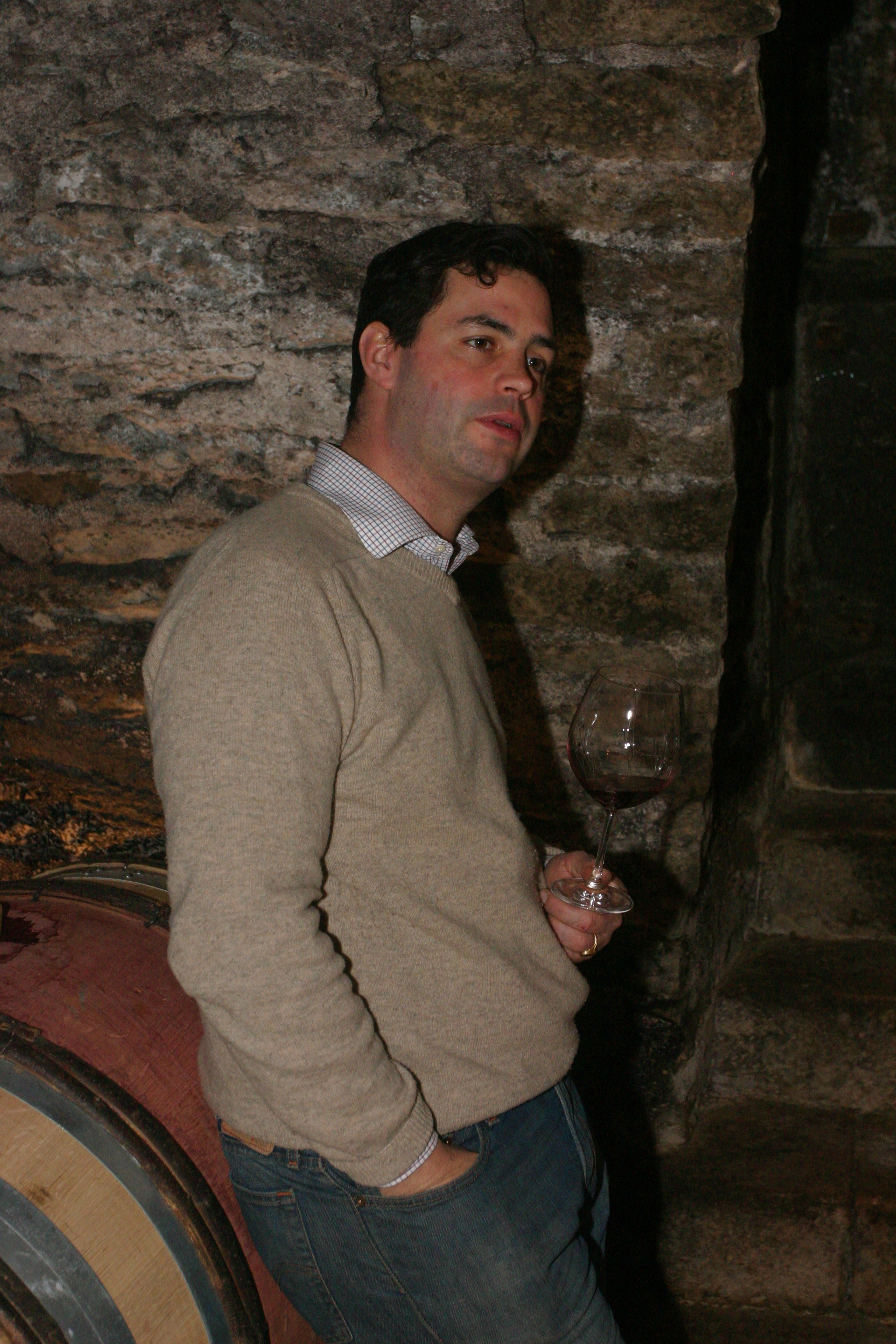
Winemaker Louis-Michel Liger-Belair
Louis-Michel is an adherent of lutte raisonnée, a system of vine cultivation that is essentially organic and noninterventionist. Lutte raisonnée entails holistic and balanced management of the vineyard, with primary focus on the microbial health of the soil and the biodiversity of the vineyard. The governing policy is to support and maintain the natural ecosystem of the vineyard so that the vines can prosper without intervention, thereby naturally resisting pests and disease. The system pursues a reasoned and not absolutist approach, however, and practitioners of lutte raisonnée allow for the possibility of limited chemical intervention if certain danger thresholds are passed.
A regimen of organic farming and minimal intervention is rigorously followed at the Domaine In order to promote the microbiological life of the soil, herbicides are banned and the soil is turned with a horse-drawn plough. The rationale is that a horse has a much lesser impact on the soil than would a tractor. The hooves compact the soil intermittently and randomly whereas a tractor is continuous and invariable in its tracks.
When full ripeness has reached, the Domaine harvests the grapes as quickly as possible to assure freshness and vibrancy. In order to avoid crushing the bunches, the grapes are placed into small (14 kilo) perforated cases and rushed to the winery.
Once the grapes make it to the sorting table at the cuverie, the work is essentially complete. To adopt a musical metaphor of the kind much favored by Louis-Michel, once the grapes are placed on the sorting table, the score is final and complete. It remains to the instrumentalist only to interpret faithfully (and artistically) the music that has been written.
The grapes are entirely destemmed and conveyed uncrushed to the fermenting vat by belt. Once in the vat, the grapes are cooled to a fifteen degrees C°; at which temperature they remain for about a week. Fermentation then begins naturally with indigenous yeasts.
Fermentation typically lasts 10-12 days, during which time the carbon dioxide, which is a byproduct of fermentations, carries solids to the surface where they combine with the skins to form a “cap”. Inasmuch as many subtle flavors as well as color compounds are found in this cap, Louis-Michel coaxes these qualities out of the cap through pigéage (pushing the floating cap back down into the fermenting wine) and remontage (pulling the wine from the bottom of the vat and pumping over the cap).
The grapes are then lightly pressed. The free run juice and the press wine are blended and left in vats for about ten days to settle the lees. The suspended solids fall to the bottom of the vats, and the clarified wine is a transferred by gravity into new oak barrels. After malolactic fermentation and aging for 12-15 months, the wine is racked into tank where it rests for an additional 2-3 months. The wine is bottled by gravity without pumping, and without fining or filtration.
Profile: Domaine de la VOUGERAIE
Posted in Burgundy, Wine, tagged Domaine de la Vougeraie, Pascal Marchand, Pierre Vincent on March 21, 2010| 4 Comments »

The creation of the Domaine de la Vougeraie by the Boisset family in 1998 remains one of the most extraordinary evenements in Burgundy in recent times. Uniquely, a major domaine emerged and quickly earned a place at the very top of the hierarchy in the Cote d’Or.

Jean-Charles Boisset
Directing this phenomenon, initially, were two complementary and remarkably young, talented, and charismatic binary stars:
Pascal Marchand
Jean-Charles Boisset, the American-educated Boisset scion of vision and grace, and Pascal Marchand, the French Canadian poet-turned-winemaking genius and Pied Piper of biodynamie in Burgundy. Beginning in 2006, the abundantly talented Pierre Vincent succeeded Marchand as winemaker at Domaine de la Vougeraie. The consensus of critics is that the wines have become even more approachable under Vincent.
Domaine de la Vougeraie includes an amazing 33 hectares in 29 different appellations, including six grands crus (5 red and 1 white) as well as two monopoles in Vougeot, the Clos Blanc de Vougeot and Le Prieuré. In general, the vines at Vougeraie are planted 10,000 to the hectare and trained according to the Guyot method. All the vineyards of the Domaine are farmed by entirely organic methods of agriculture. In fact, the principles and rules of biodynamie are rigorously followed in nearly all of the vineyards, including horse-ploughing wherever possible. Yields of Pinot Noir average a mere 20-25 hl/ha due to such agriculture as well as old vines.
Vinification varies depending on vintage and appellation. As a general rule, however, the grapes are 100% destemmed, and then cold soaked in stainless steel for 4 to 5 days. This is followed by 6 to 8 days of alcoholic fermentation and 8 to 14 days post-fermentation maceration in traditional wooden vats. The wines are then racked into wooden barrels (typically 30% new wood) and bottled by gravity without fining or filtration.
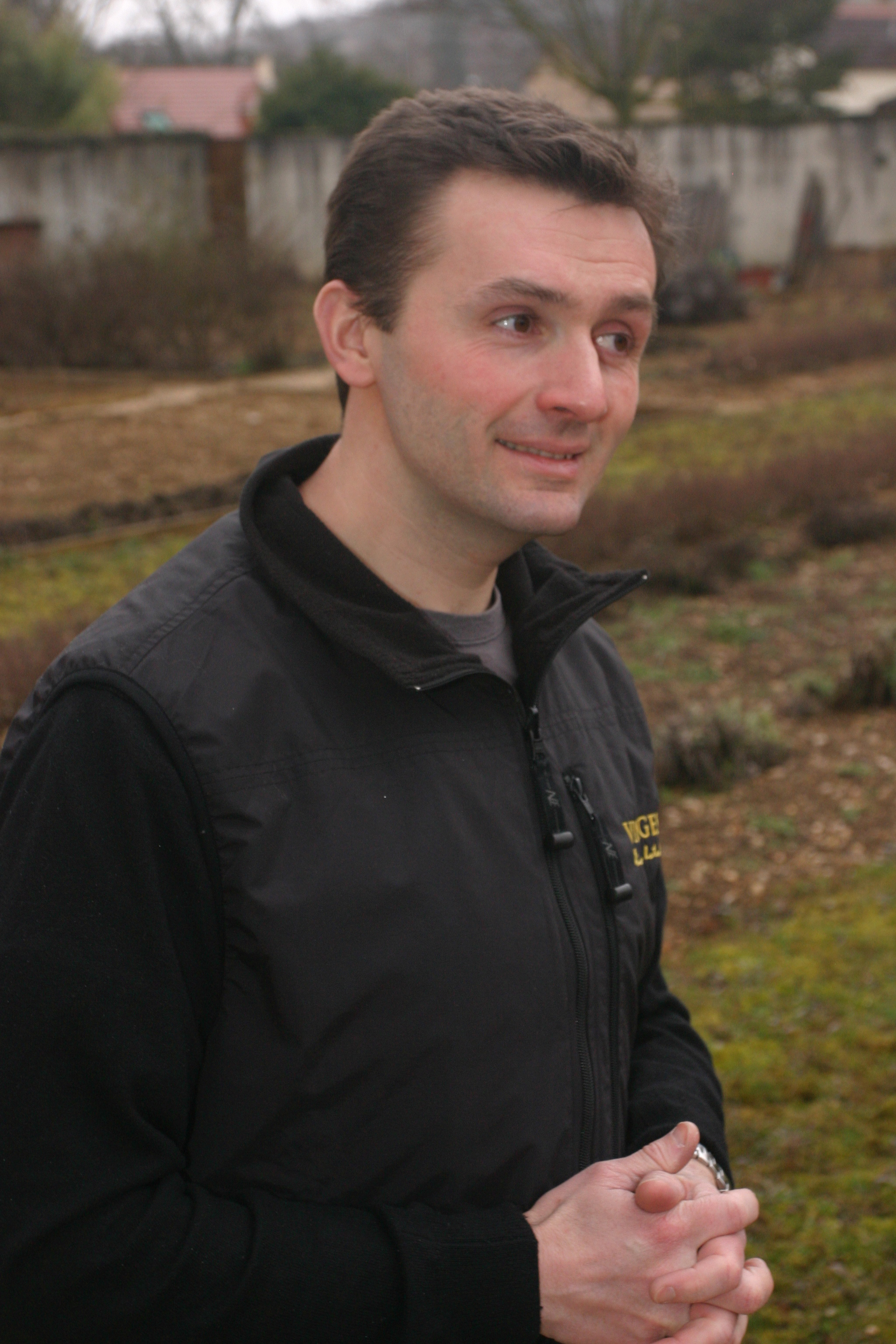
Winemaker Pierre Vincent
Remarkably, winemaker Pierre Vincent is able to produce twenty-nine different wines, each of which is fundamentally true to its terroir. From its monumental Musigny, to its signature Clos Blanc de Vougeot, and extending to the regional (but far from simple) Bourgogne Rouge, the wines of the Domaine reflect precisely the character of the underlying vineyard.
 Jockovino