Feeds:
Posts
Comments

Archive for the ‘Appellations’ Category

Meursault, Les Poruzots  is an 11.44-hectare Premier Cru climat in Meursault.  Les Poruzots is itself comprised of three subclimats (Porusots-Dessus, Porusots-Dessous,  and Le Poruzot) and lies just north of Les Genevrières, east of Les Bouchères and south of Les Gouttes d’Or. The vineyard faces east from an altitude varying between 230 and 280 meters, and enjoys a soil rich in clay. The wines are very similar to  Les Bouchères and Les Gouttes d’Or, with perhaps less finesse than Les Charmes, but are more fruit-forward and better structured.

One of the finest examples of Les Poruzots is produced by Domaine Franςois Mikulski, whose two parcels, planted  in 1948 and 1985, aggregate .6 hectares and are well- situated in Poruzots-Dessus.

Read Full Post »

Meursault, Les Gouttes d’Or is a 5.33-hectare Premier Cru  climat of Meursault, situated in the central part of the commune, south of the town and north of Les Bouchères and Les Poruzots. The name, “drops of gold,” was perhaps coined by some proto-marketing guru. In fact, the wine has been renowned at least since the time of Thomas Jefferson, who preferred Gouttes d’Or to all other white Burgundies, save Le Montrachet itself. East facing on a slope, at an altitude varying between 240 and 260 meters, the soil is composed of heavy clay over a limestone base. Gouttes d’Or resembles Les Charmes in weight and texture, but is a little firmer and exhibits fuller structure.

Excellent examples of Meursault, Les Gouttes d’Or is produced by Domaine Franςois Mikulski and by Domaine des Comtes Lafon.

Read Full Post »

Meursault, Les Charmes is a 31.12 hectare Premier Cru climat in Meursault. Lying at the southern end of the commune on the border of Puligny-Montrachet, just down slope from Les Perrières and adjacent to Les Genevrières, Les Charmes is the largest of Meursault’s Premiers Crus and each of its two subclimats, Les Charmes-Dessus (the upper parcel)  and Les Charmes-Dessous (the lower parcel) is larger than Les Perrières and almost as large as Les Genevrières.  Les Charmes faces south and southeast from an altitude varying between 230 and 260 meters.  The soils of Les Charmes are deep clay and limestone, silty and pebbly with traces of iron.  Due to their lower position on the slope, Meursault Les Charmes are richer and heavier than the thin, stony soils of Les Perrières above it, and more typical Meursault Premier Cru. Though less steely and racy than Perrières, and less spicy than Genevrières,  Charmes produces round and lush Meursault of great elegance, style and harmony  

In the view of many critics, the better wines originate from the upper section of the vineyard,  Les Charmes-Dessus. Clive Coates has even suggested that the lower climat, Les Charmes-Dessous, could be downgraded to village status. Notwithstanding this criticism, however, it remains undisputed that the quality level of Les Charmes-Dessus, rivals that of Les Perrières and Les Genevrières. The name Les Charmes comes not, alas, from any special allure or enchantment of the vineyard, but derives more prosaically from the pre-Latin root of champs, and means simply field or meadow. .  

Among the best parcels of Les Charmes are those produced by François Mikulski and Dominique Lafon, all of which are well-situated in Les Charmes-Dessus.   Mikuksi’s two parcels, which total .80 hectares, were planted, respectively, in 1913 and 1930. Lafon’s 1.71 hectare parcel includes vines at the extreme southern part of the vineyard, immediately next to the Les Combettes climat of Puligny-Montrachet. Lafon’s oldest vines were planted in 1946 by Auguste Morey; the next oldest  by Pierre Morey in 1963; and the most recent by Dominique Lafon in 1996.

Read Full Post »

Meursault, Les Genevrières  is a 16.48 hectare Premier Cru climat in Meursault. The vineyard  is itself comprised of four contiguous sub-climats and lies in the southern section of the commune of Meursault, just north of Les Charmes. The vineyard faces east from an altitude varying between 240 and 280 meters, and enjoys a soil with a higher proportion of clay than most other limestone-based Premiers Crus in Meursault. The name Genevrières derives from the supposed presence there, generations ago, of juniper bushes. (Tasters who claim to detect the faint tang of juniper berries in  Genevrières should seek professional counseling.) By reputation, the Genevrières climat is considered qualitatively second only to Perrières, although many thoughtful gourmands, as well as several notable winemakers, Dominique Lafon and François Mikulski included, express a culinary preference for Les Genevrières. Without doubt, Les Genevrières is paradigmatically Meursault: lime blossom, honey and hazelnut.  The wines are noticeably less steely than Les Perrières, but more exotically spiced, rounder and with greater finesse.

            Among the most exemplary parcels of  Les Genevrières are the two parcels (planted  in 1948 and 1993) of Domaine Franςois Mikulski, aggregating .5 hectares and situated in Genevrières-Dessus;  and the  two parcels belonging to Domaine des Comtes Lafon, totaling .55 hectares. The Lafon parcels are similarly located in Genevrières-Dessus, almost adjacent to Les Perrieres, and face east from slopes with a 15% gradient. The older and larger Lafon parcel was planted in 1946 and is about .37 ha; the younger parcel, at around .18 ha, was planted in 1993.

Read Full Post »

Meursault, Les Perriéres  is a 13.71 hectare Premier Cru vineyard in Meursault,  comprised of four climats, which is commonly believed to produce the most outstanding wine of Meursault’s Premiers Crus. In fact, two of  the climats, Les Perrières-Dessous and Clos-des-Perrières are often touted for promotion to Grand Cru status. Les Perrières lies near the southwestern corner of the commune of Meursault, just down slope from Blagny, and abuts Puligny-Montrachet on the  south. The soils are thin and stony and are sometimes said to share more in common with Puligny than Meursault. The vineyard takes its name from a word meaning quarry, but only figuratively:  the vineyard contains an abundance of limestone outcroppings and scree, but stone was never actually quarried there. The wines from Les Perrières are quite powerful with an exuberant minerality and steeliness.

 Among the finest in parcels in Les Perrières are those belonging to the Domaine des Comtes Lafon.  Lafon owns two parcels in Les Perrières, both in Les Perrières-Dessous,  one of about .67 hectares planted in 1955 and the other of almost .10 hectares planted in 1983. The Lafon vines are planted on a very steep slopes (10%-16%) and face east/southeast. The underlying soil is limestone and white marl over limestone schiste.

Read Full Post »


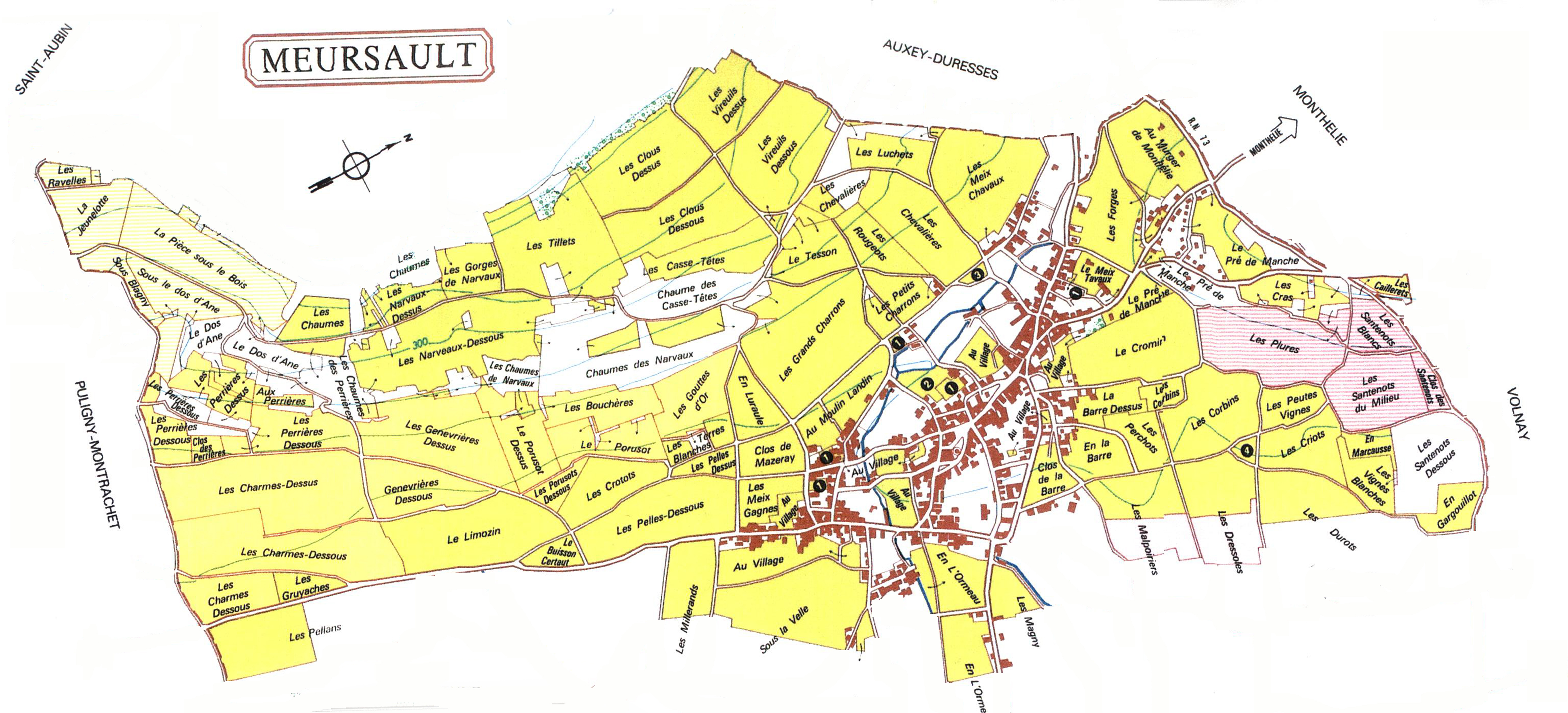
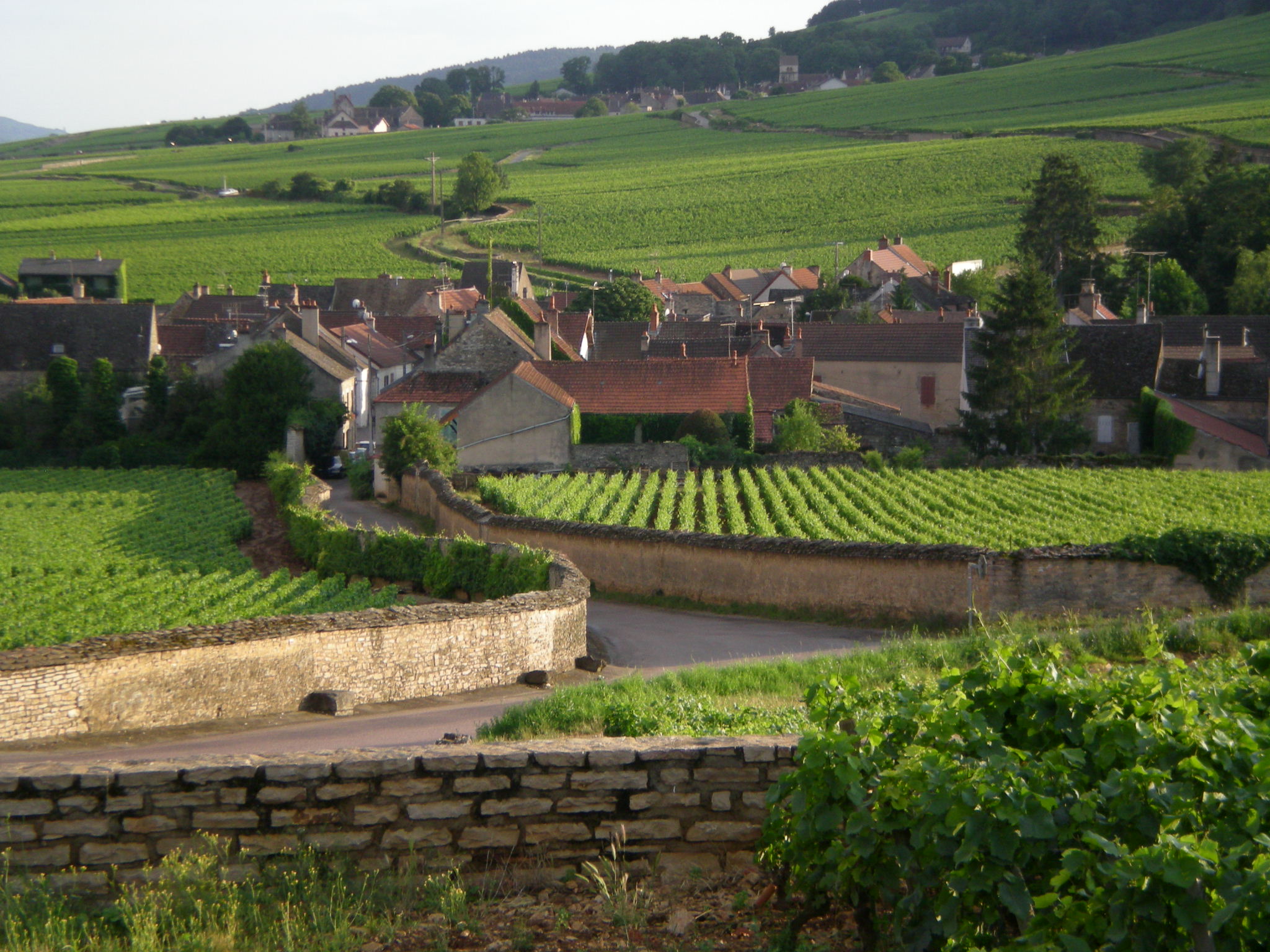
           Meursault is a wine appellation that includes some of the finest white French Burgundy. Wine so labeled must come from vines planted in the commune of Meursault situated in the Côte de Beaune region of the Côte d’Or department of Burgundy in eastern France.       

           The commune of Meursault, which extends south from Volnay, and immediately north of Puligny-Montrachet,  is the largest white wine producing area of the Côte-de- Beaune. To the northwest and north-northwest of Meursault are found Auxey-Duresses and Monthélie; toward the northeast is Volnay.      

          Meursault is the social and financial center of that portion of the Côte-de- Beaune referred to as the “Côte des Blancs” on account of the preeminent quality and reputation of its white wines. Meursault, Chassagne and Puligny comprise this part of the Côte-de-Beaune that is almost universally acknowledged as producing the finest Chardonnay-based wines in the world.      

            The suggestion, not infrequently made, that the name Meursault derives from the Latin for “mouse jump” (muris saltus) is risible at best, most likely the idle conjecture or schoolboy humor of a bored Latin student from a rival village.  Though etymological conjectures are always problematic, Meursault far likelier derives from the Celtic mare + saulis, or swamp willow (modern Fr. saule de marais). The lower part of the village is quite flat although today, fortunately, is quite dry.      

          The vineyards of Meursault occupy 436.82 hectares, of which 304.94 produce village-level Meursault. Many of these village-level wines boast well-known lieux-dits, and produce wines that rival many premiers crus. Best known perhaps are Lafon’s Clos de la Barre and Desirée, but other worthies include Les Tessons, Les Narvaux, Les Casse-Têtes and Les Clous.      

          While there is no grand cru, there are 131.88 hectares  of Premier Cru Meursault divided among different climats, the best known of which are Les Perrières (13.72 hectares ), Les Genevrières (16.48 hectares ), Les Charmes (31.12 hectares ), Les Poruzots (11.43 hectares ) and Les Gouttes d’Or (5.33 hectares ).      

          The commune of Meursault is roughly fish-shaped, with the head pointing northeast toward Volnay and the tail abutting Puligny-Montrachet. The town of Meursault bifurcates the fish just behind the head. The “fishhead” section, northeast of the village, is geologically and viticulturally a continuation of Volnay and Monthelie. The soil is comprised of a mixture of clay, pebbles and iron-rich scree over a base of Bathonian limestone. Most of the best wine produced from this sector is red. Since Meursault has long been renowned for its white wines, and since neighboring Volnay once produced the most  sought-after of reds, the vignerons of the fishhead sector won the right to sell their red wine as Volnay even though their vines are situate in Meursault. The best known vineyard here is Santenots.      
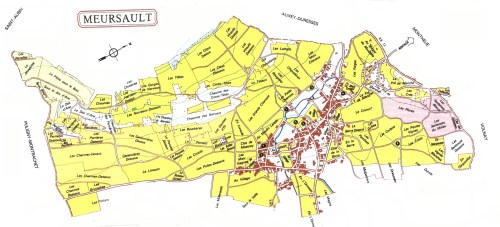
Meursault: fish-shaped      

          South of the village the geology changes markedly. Here the vineyards are spread out over gentle slopes whose easterly exposure, along with an abundance of Bathonian and Callovian limestone and white marl create an ideal environment for Chardonnay. Up slope toward Auxey-Duresses, the soil becomes increasingly thin, covered with scree and underlain with friable schiste. The finest terroirs in this sector, and the location of the Premiers Crus, are found in a band running parallel to the RN 74, in the middle third of the “fish”, extending from the tail to approximately the center.      
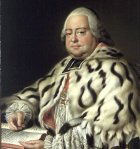
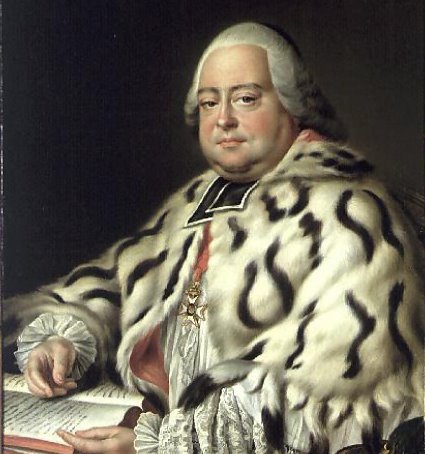
"I would not wish my Creator to see me grimace at the moment of Communion."

           Simultaneously opulent, subtle and delicate, Meursault matures slowly over a long period of time. Cardinal de Bernis, Louis XIV’s ambassador at the Holy See, always took care to celebrate mass with a Meursault, lest his Creator witness him wince during Holy Communion.  “I would not wish my Creator to see me grimace at the moment of Communion.”            The best-regarded sources of Meursault include Patrick Javillier, Dominique Lafon, François Mikulski, and Jean-Marc Roulot.

Read Full Post »
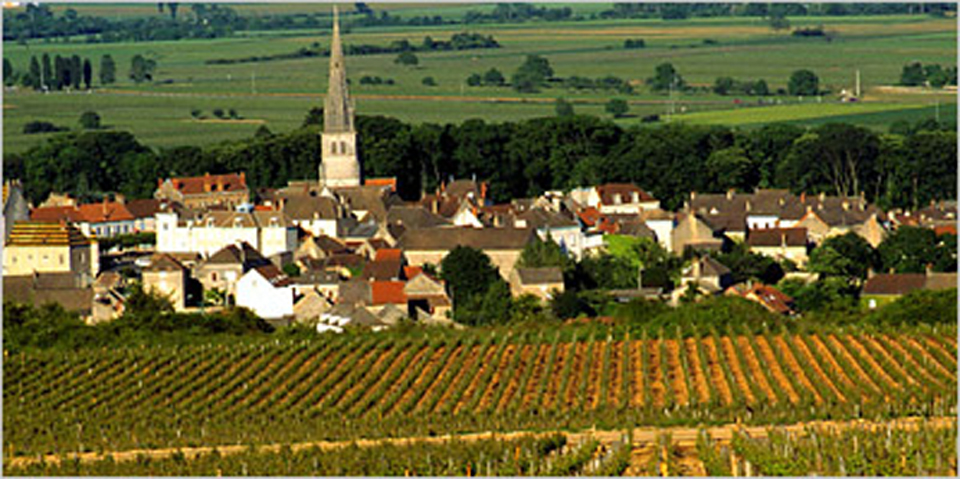
    

Pommard is a wine appellation that produces excellent red Burgundy. Wine so labeled must come from Pinot Noir vines planted in the commune of Pommard situated in the Côte-de-Beaune region of the Cote d’Or department of Burgundy in eastern France.    

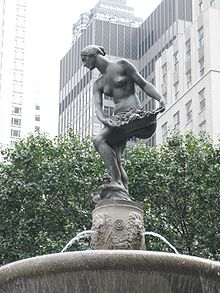
South of Beaune are found the two communes, Pommard and Volnay, whose wines (apart from the Grands Crus of Corton) comprise the finest red wines of the Côte-de-Beaune.  The name Pommard, by tradition, derives from Pomona, the Roman goddess of fruit trees and orchards, to whom early Gauls dedicated a temple on the site. This is the same goddess Pomona who    

The goddess Pomona

appears in full golden mufti on the Great Seal of the City of Los Angeles and whose bare pulchritude is captured by a demure statue now situate in the fountain in front of the Plaza Hotel in New York City.    

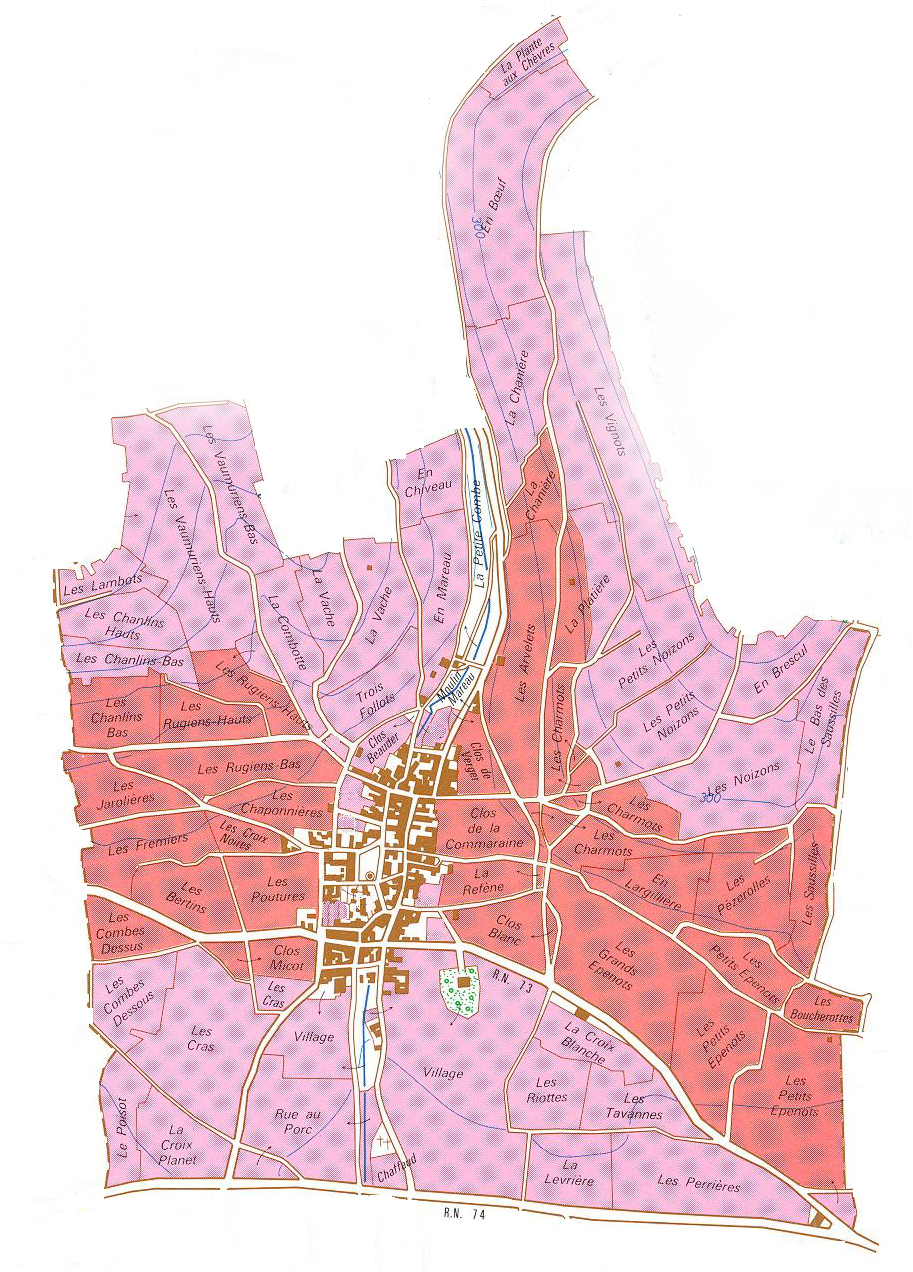
The commune of Pommard lies immediately adjacent to Beaune, and begins at the point where the Route forks into the Autun Road (RN 73) and the RN 74. Pommard is generally square-shaped with a center band, running more or less north-south, containing the 24 Premier Cru parcels totalling 125.19 hectares,  and 211.63 hectares of village-level Pommard. Total production averages around 13,532 hectoliters of wine per year, entirely red. There are presently no Grands Crus although Rugiens-Bas is expected to be promoted and Clos des Epeneaux would also be deserving.    

The prime vineyards in Pommard are generally thought to be located either on the Beaune side, where are found Les Pézerolles and Les Epenots; or to the south of the village, notably Rugiens-Bas. Interestingly, these two sections produce wines of distinct contrast. The stonier, better-drained soils of Les Pézerolles and Les Epenots produced finer, more delicate wines, whereas the iron-rich, clay soil of Rugiens-Bas produces more powerful and richer wines.    

Pommard

The vineyards of Pommard generally face south and southeast. The soil is somewhat varied in the commune, although there prevails generally a subsoil base Argovian limestone with an admixture of ferrous clay and marl. The thinner and rockier soils are found, not surprisingly, on the slopes above the city toward Beaune; and these give way to increasingly ferrous clay soils as the slope continues downward toward Volnay. Only in the area above the Epenots wall, along the Autun Road, is there much calcareous debris and pebbles.    

Among the finest producers of Pommard are Domaine de Montille and Comte Armand (Clos des Epeneaux).

Read Full Post »


   Nuits-St-Georges is a wine appellation that includes some of the finest and best-known French Burgundy wine. Wine so labeled must come from vines planted in the commune of Nuits-St-Georges (or the adjoining commune of Prémeaux-Prissey with which it is viticulturally joined) situated in the Cote de Nuits region of the Cote d’Or department of Burgundy in eastern France.

                      In From the Earth to the Moon, author Jules Verne envisioned in 1867 that the first lunar explorers would celebrate their moon landing with “a fine bottle of Nuits.”    In 1971, to commemorate Verne’s sci-fi forecast, Apollo 15 astronauts named one of the moon’s craters “St. George Crater”. Completing the circle, the town council in Nuits-St-Georges rechristened the main square in the village Place de la Cratère. The vineyard of St-Georges, celebrated by Verne and Apollo 15, has been successfully producing wine of the first rank for at least one thousand years.

                      Leaving Beaune and heading north toward Dijon, Nuits-Saint-Georges (together with its viticultural Siamese twin Prémeaux-Prissey) marks the gateway of the Côte-de-Nuits, the Oz of Pinot Noir. The commune has been inhabited since antiquity and the vestiges of  a substantial Gallo-Roman villa have recently been excavated. The name “Nuits” is derived from the Latin “nutium,” signaling the fine walnuts that were once prolific in the area.  

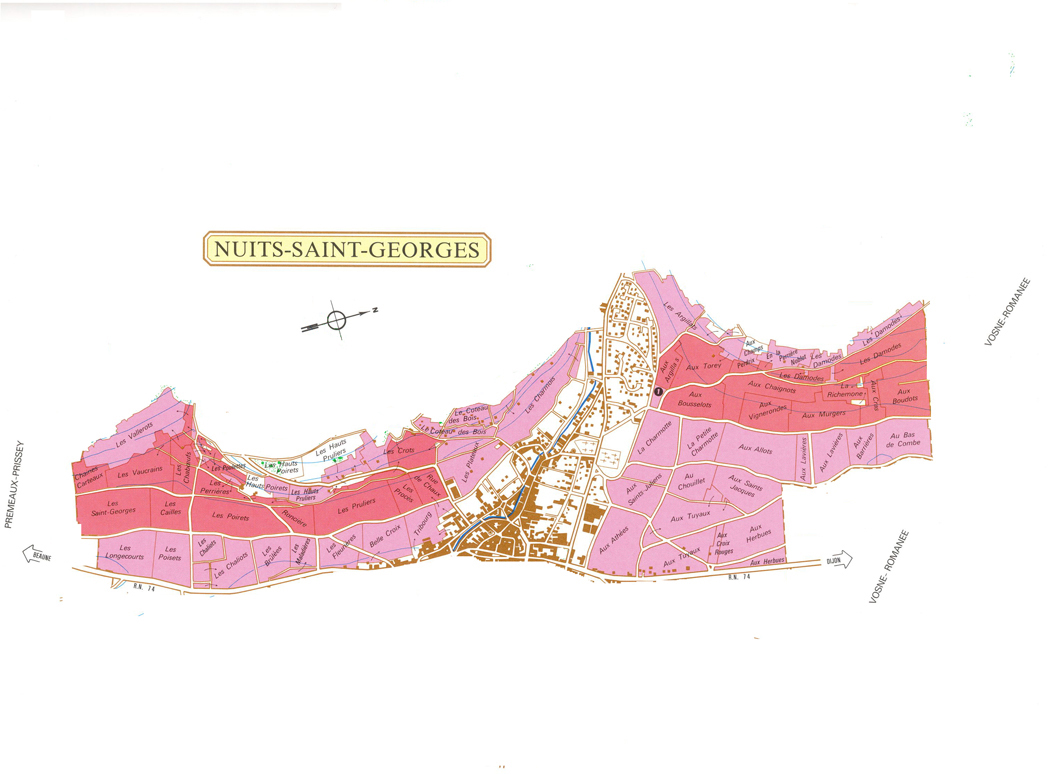
                      Nuits St Georges, together with Prémeaux-Prissey, comprises 322.59 hectares, including 37 premiers crus aggregating about 147 hectares and about 175 hectares of village-level vineyards. The soil types fall into three sections. The town and the vineyards are bisected by the Meuzin River, which flows east from the hills above the town. North of the river, toward Vosne-Romanée, lies the first section. There, the soil is a continuation of Vosne: an admixture of limestone with a small amount of clay over a Bathonian limestone base, and covered with pebbles and scree. Most prominent among these vineyards are Aux Boudots, Aux Thorey and Les Damodes. To the south of the Meuzin River, toward Beaune,  lies the second section. Here the soil is somewhat richer and deeper, certainly with a higher clay content, but also with sand and gravel. The base here is comprised mostly of hard Comblanchien limestone. Most prominent here is the commune’s signature vineyard, Les Saint-Georges.  Further south, and within Prémeaux-Prissey, is found the third section. In the higher elevation, toward 320m,. Here the soil is quite thin and fine, particularly in the Clos de l’Arlot. Further downslope can be found Clos de Forêts, Les St-Georges and Clos de la Marechale.

                    Among the best-regarded sources of Nuits-St-Georges are Joseph Faiveley, Henri Gouges, and Domaine de l’Arlot. Other well-known producers with notable vineyards in Nuits-St-Georges include J-F. Mugnier (Clos de la Marechale).

Read Full Post »


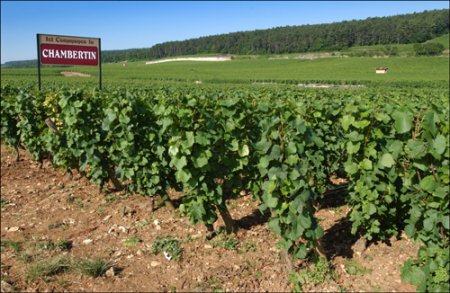
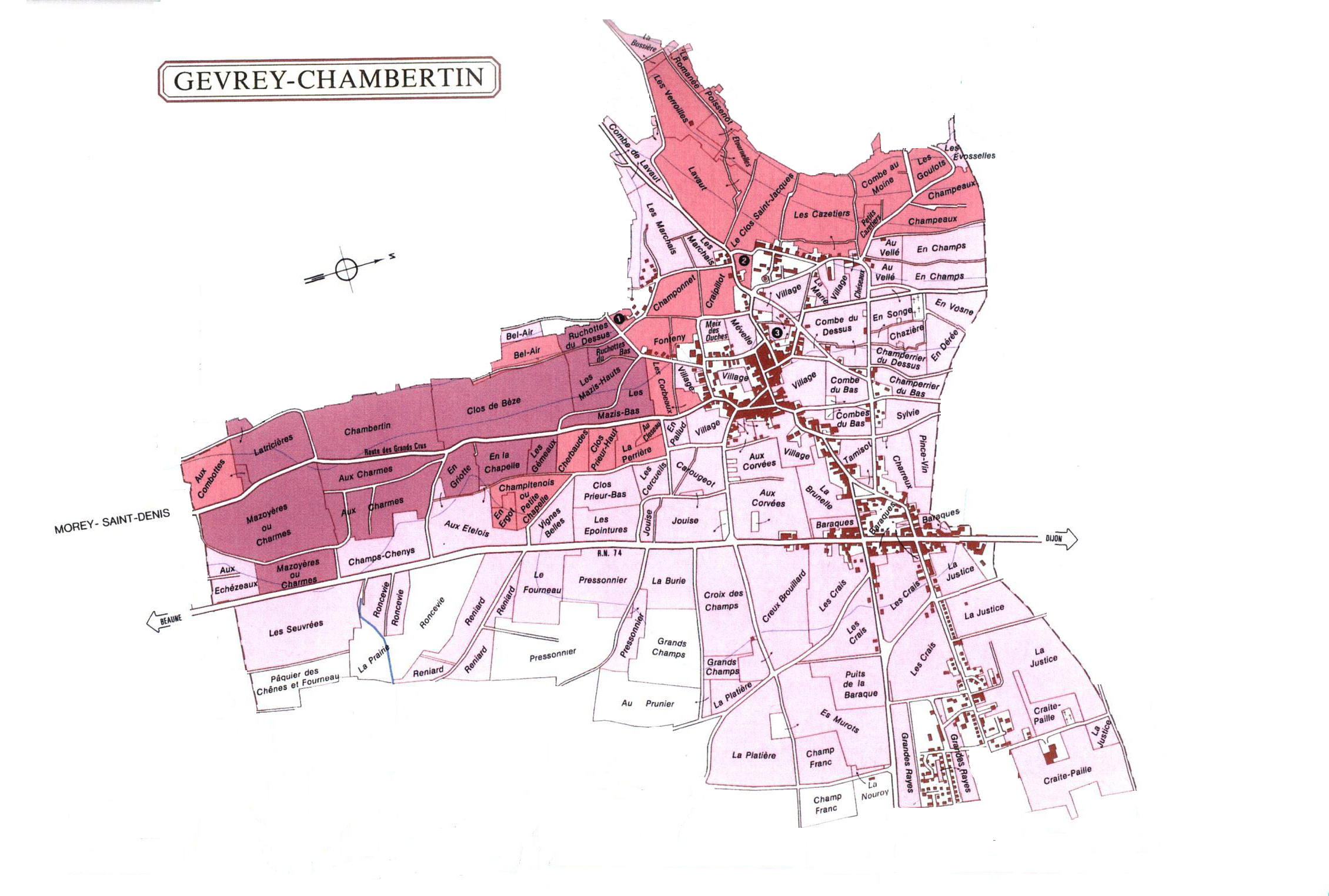
Gevrey-Chambertin is a wine appellation that includes some of the finest and best-known French Burgundy wine. Wine so labeled must come from vines planted in the commune of Gevrey-Chambertin (or the adjoining commune of Brochon with which it is viticulturally joined) situated in the Côte de Nuits region of the Côte-d’Or department in Burgundy in eastern France

Gevrey-Chambertin produces some of the world’s most famous Pinot Noir-based wines. The best examples of Gevrey-Chambertin are rich, deeply-colored and sumptuous. Above all, according to Jancis Robinson, they are “complete” wines. Laying claim to the sobriquet, “King of Wines. Wine of Kings,” Gevrey-Chambertin, according to the poet Gaston Roupnel,  expresses “All that great Burgundy can be.”   Gevrey-Chambertin is the largest (532 hectares; about 2 square miles) commune in the Côte-de-Nuits. It lies just north of Morey-St-Denis along the Beaune-Dijon Highway (RN 74), 31 km from Beaune and  14 km from Dijon. The appellation comprises not only the commune of Gevrey-Chambertin but also 11 climats in neighboring Brochon.  Unusually for Burgundy, there are classified vineyards on both sides of the highway.  All wine from Gevrey-Chambertin is red, derived entirely from Pinot Noir.   

 In 630 A.D., the Duke of Amalgaine donated a 14 hectare vineyard to the Abbey of Bèze, which was (avant-garde) one of the only cloistered orders to house both monks and nuns. The area was recorded in Roman records as “Gabriacus”, Romano-Gallic argot for goat, possibly after an epithet hurled at some of the randier monks by the Abbotess of Bèze. Perhaps because of its libertine ways, the Abbey of Bèze and its vineyards came under the authority, first, of the Benedictines at Cluny and later the Trappists of Cîteaux.   

  As to the name Chambertin, by which name the best wines have long been called, a highly dubious but oft-repeated local legend teaches that a peasant named Bertin planted some vines nearby in a champ (field), conjoining his name and christening the vineyard Champ de Bertin, or Chambertin.  Since the entire wine-producing area was under the firm control of rich and powerful monasteries, who profited handsomely from sales of wine, and since peasants by definition didn’t own land anyway, the most one can do is to smile tolerantly. In 1847, King Louis Philippe, by royal decree, changed the town name from Gevrey to Gevrey-Chambertin.  

Napoleon was particularly partial to the wines of Chambertin and, according to another problematic tradition, drank little else from the signature bottles emblazoned with an “N”. Napoleon even laid in a good stock for his ill-fated journey to Moscow, and then suffered the double indignity of losing the war and having his bottles “liberated” by marauding Cossacks.  

               Gevrey-Chambertin includes 9 grands crus totaling 87.06 hectares: Chambertin, Chambertin Clos de Bèze, Chapelle-Chambertin, Charmes-Chambertin, Mazoyères-Chambertin, Latricières-Chambertin, Mazis-Chambertin, Griotte-Chambertin and Ruchottes-Chambertin. These vineyards are situated south of the village on a slope with eastern exposure and an altitude of 260-320 meters. The soil is a mixture of clay and gravel, and white marl over a base of limestone.  


               There are 26 premiers crus occupying 85.53 hectares, most notably Le Clos St-Jacques, Lavaux St-Jacques, La Combe aux Moines. Half of the premiers crus are sited around the perimeter of the grands crus.  The other half, generally thought to be better on account of their calcareous clay soils, are found on a steep, southeast-facing slope to the north. The remaining 359.89 hectares, of which 50.59 lie in the adjoining commune of Brochon, produce the village wines of Gevrey-Chambertin. The flatter lands, which abut the highway, show higher concentrations of clay.  

               The finest producers of Gevrey-Chambertin include Armand Rousseau, Denis Bachelet, and the Domaine de la Vougeraie.

Read Full Post »


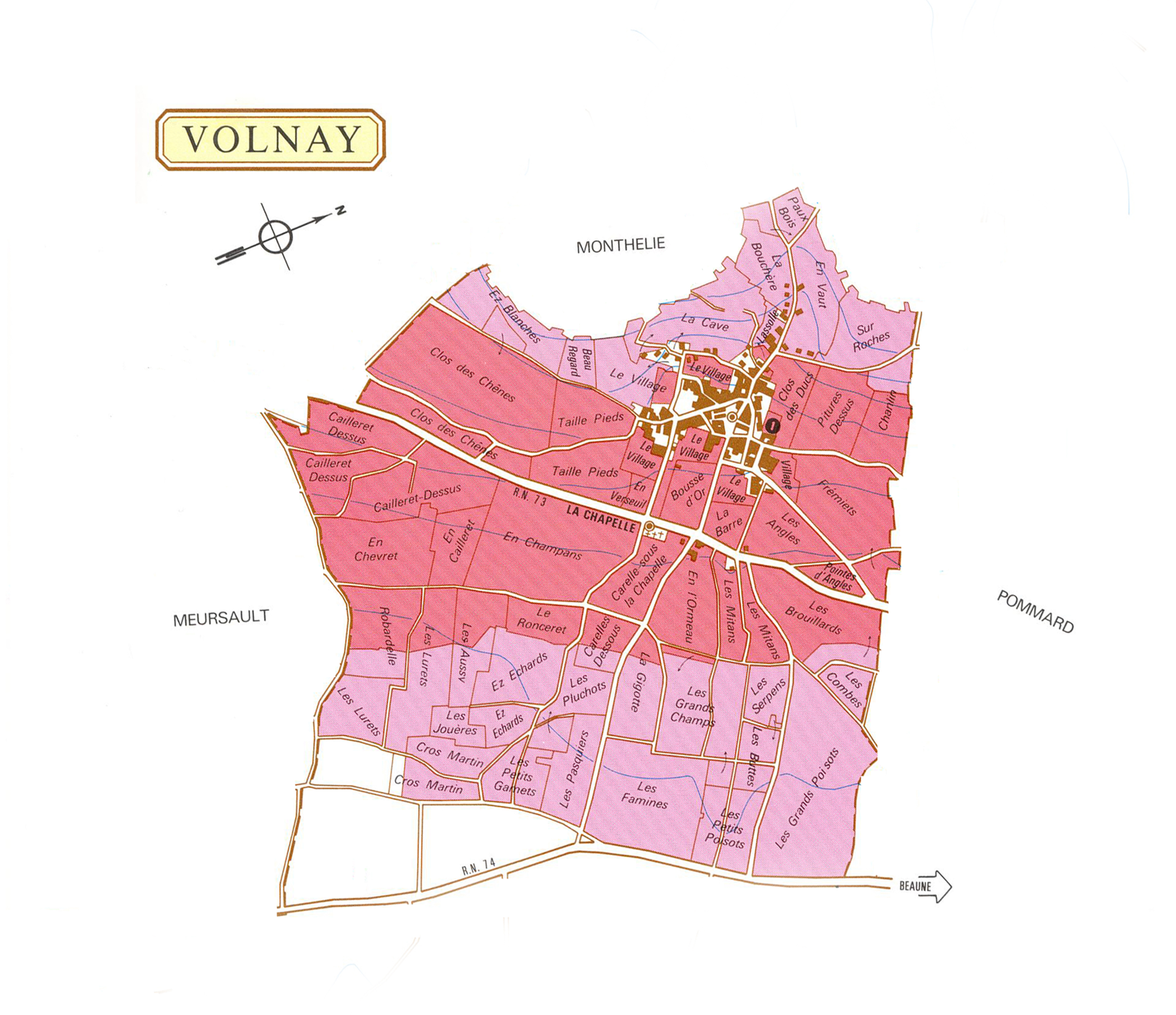
               Volnay is a wine appellation that produces some of the finest red Burgundy .  Wine so labeled must come from vines planted in the commune of Volnay (or a portion of the adjoining commune of Meursault) situated in the Côte de Beaune region of the Côte d’Or department of Burgundy in eastern France.

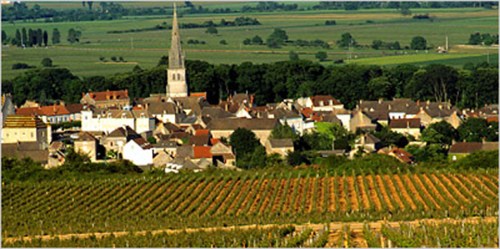
           Volnay is perhaps the most architecturally aesthetic village in Burgundy. Bordered by Pommard on the northeast, and Meursault to the south, the commune of Volnay lies near the midpoint of the Côte de Beaune. The name Volnay, according to Clive Coates, derives from a Celtic or early Gallic water deity, Volen. The village itself is built around a Romanesque church in the location selected by Hugues IV, Duke of Burgundy. Remnants of the hunting lodge used by the Dukes can be found a short distance from the village. The caves of Domaine Lafarge, which date from the 13th Century, are believed to have been appropriated by the Dukes and incorporated into the Château de Volnay, which was destroyed by fire in 1749.

            Volnay vineyards cover more than 213 ha. on southeasterly-exposed slopes, of which about 115 ha. are occupied by 26 premiers crus, and about 98 ha. are in village level vineyards. In addition, there are six premier cru parcels, totalling 21 ha.,  located at the northern extremity of Meursault, but entitled to Volnay appellation. Only red wines are permitted and there are no grands crus.

            Volnay is unique in that its best vineyards lie below the town (toward RN 74) and not above it, as all other communes of the Cote d’Or. The premier cru vineyards lie at mid-slope, below the town, while the lesser village vineyards are either on higher, more exposed hills above the town, or on lower and flatter terrain nearer RN 74.

            Some of the best vineyard sites are generally thought to be those immediately adjacent to the town of Volnay: Clos des Ducs, Bousse d’Or, Le Village (which includes several monopoles including Bousse d’Or and Clos du Chateau des Ducs)  Carelle-sous-la-Chapelle and Taillepieds. This soil is hard marl with a high percentage of limestone. Another prime cluster of premier cru vineyards is found south of the village toward Meursault: Champans and Caillerets among them. Here the slopes are steeper, with more eroded soils exposing Bathonian limestone, and creating stonier soils. Another distinct section lies northeast of the village toward Pommard. Here the stony soils are predominantly friable schiste. Immediately above the Autun Road (RN 73) is another soil type, the pure limestone of Clos des Chênes. The final major section is the grouping of premier cru vineyards within Meursault, notably the Premier Cru Santenots-du-Milieu. Here the soils exhibit more limestone, but offer a variety of topography and soil type.

            Volnay has long been celebrated for its elegance and grace. Characterized by seductively fragrant bouquets, the wines display intense but delicate pinot noir flavors. Volnay is often and justifiably described as  “feminine” on account of its charm and refinement.

            The “Big Three” domaines producing fine Volnay are generally conceded to be Michel LafargeDomaine de Montille and Marquis d’Angerville.

Read Full Post »

« Newer Posts - Older Posts »