Feeds:
Posts
Comments

Archive for the ‘Wine’ Category

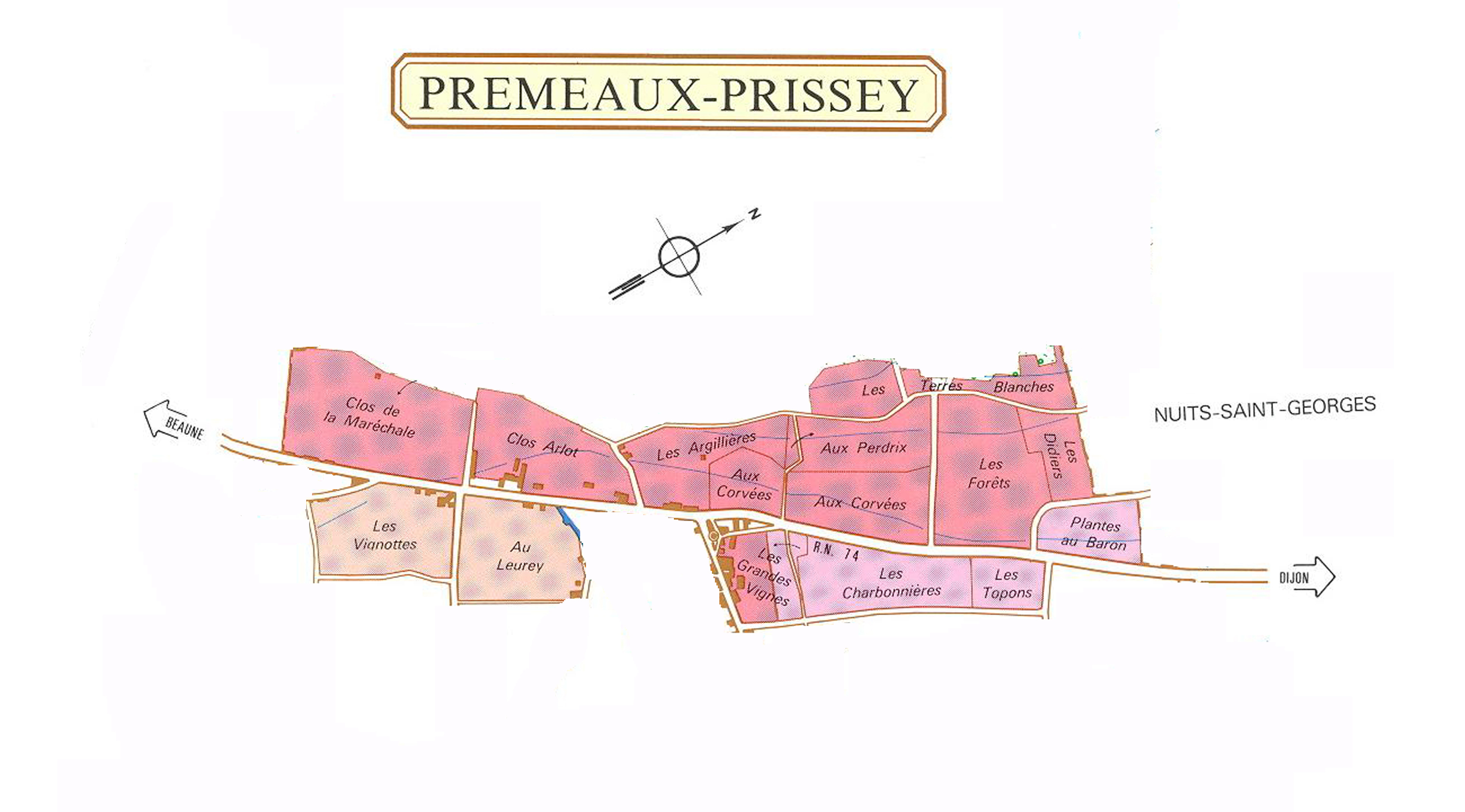
Nuits-St-Georges is a wine appellation that includes some of the finest and best-known French Burgundy wine. Wine so labeled must come from vines planted in the commune of Nuits-St-Georges (or the adjoining commune of Prémeaux-Prissey with which it is viticulturally joined) situated in the Côte de Nuits region of the Côte-d’Or department of Burgundy in eastern France.

In From the Earth to the Moon, author Jules Verne envisioned in 1867 that the first lunar explorers would celebrate their moon landing with “a fine bottle of Nuits.”    In 1971, to commemorate Verne’s sci-fi forecast, Apollo 15 astronauts named one of the moon’s craters “St. George Crater”. Completing the circle, the town council in Nuits-St-Georges rechristened the main square in the village Place de la Cratère. The vineyards of Nuits-St-Georges, celebrated by Verne and Apollo 15, have been successfully producing wine of the first rank for at least one thousand years.

Leaving Beaune and heading north toward Dijon, Nuits-Saint-Georges marks the gateway of the Côte-de-Nuits, the Oz of Pinot Noir. The commune has been inhabited since antiquity and the vestiges of  a substantial Gallo-Roman villa have recently been excavated. The name “Nuits” is derived from the Latin “nutium,” signaling the fine walnuts that were once prolific in the area.  

Nuits St Georges, together with Prémeaux-Prissey, comprises 322.59 hectares. While there are no Grands Crus, there are 37 Premiers Crus aggregating about 147 hectares, and about 175 hectares of village-level vineyards. The overwhelming majority of vines, some 97%, are planted in Pinot Noir, from which prized red Burgundy is made, but there are a few vines planted in Chardonnay from which a small group of domaines, notably Domaine J-F. Mugnier and Domaine de l’Arlot, produce excellent Nuits-Saint-Georges blanc.

The soil types fall into three sections. The town and the vineyards are bisected by the Meuzin River, which flows east from the hills above the town. North of the river, toward Vosne, lies the first section. There, the soil is a continuation of Vosne:  colluvium comprised  of limestone with a small amount of clay over a Bathonian limestone base, and covered with pebbles and scree. Most prominent among these vineyards are Aux BoudotsLes Thorey and Les Damodes.

To the south of the Meuzin River, toward Beaune,  lies the second section. Here the soil is somewhat richer and deeper, certainly with a higher clay content, but also with sand and gravel. The base here is comprised mostly of hard Comblanchien limestone. Most prominent here is the commune’s signature vineyard, Les Saints Georges.  Further south, and within Prémeaux-Prissey, is found the third section, in a higher elevation, reaching 320m. Here the soil is quite thin and fine, particularly in the Clos de l’Arlot. Further downslope can be found Clos de Forêts and Clos de la Marechale.

Leading producers in the appellation include Domaine de l’Arlot for its Clos de l’Arlot and Clos des Forêts, Domaine J-F. Mugnier for its Clos de la Marechale, Domaine de la Vougeraie for its Les Damodes, and Domaine Gérard Mugneret for its Les Boudots. Other well-known Domaines include Domaine des Perdrix and Henri Gouges.

Read Full Post »


Clos des Grandes Vignes: This 2.21-hectare Nuits-St-Georges Premier Cru climat is a monopole of the Château de Puligny-Montrachet. The walled vineyard lies on the east side of the  Beaune-Dijon road (RN 74) in the middle of the commune of Premeaux-Prissey.   Facing east  and lying at 230-240 meters, the soil is nearly flat with only a 2-4% slope. The topsoil is a mixture of limestone with a small amount of clay and the subsoil is Bathonian limestone.

Read Full Post »

Les Thorey: This 5-hectare Premier Cru climat lies in the northern part of the commune of Nuits-St-Georges, uphill and to the north of the village.  Facing southeast and lying at 225-280 meters, this vineyard lies just above Aux Bousselots on a slope of 10-15%. The topsoil is a mixture of limestone and clay over a base of Comblanchien limestone. Two superb examples of Les Thorey come from Domaine Sylvain Cathiard and Domaine de Montille.

Read Full Post »

Chaines Carteaux:  This 2.07-hectare Premier Cru climat lies in the southern part of the commune of Nuits-St-Georges along the border with Premeaux-Prissy,  uphill and to the north of Les Saint Georges. Facing east and lying at 260-300 meters, this vineyard has a steep slope of 20%. With a base of Comblanchien limestone, the overlying soil is rich and deep, with high percentages of clay and sand. The name refers to small Burgudian barrels (“carteaux”) made of oak (chêne).

Read Full Post »

Les Saints Georges: This 7.52-hectare Premier Cru climat lies in the southern part of the commune of Nuits-St-Georges along the border with Premeaux-Prissy, just downhill and east of  Chaines Carteaux  and Les Vaucrains. By consensus, Les Saints Georges is the finest vineyard in the appellation and worthy of Grand Cru status.  Facing east and lying at 245-260 meters, this vineyard has a gentle hillside slope of 7-8%. The topsoil is rich and very stony with a mixture of limestone and clay.  The subsoil is a complex base of Premeaux, Comblanchien and oolitic limestone.

Read Full Post »

Les Cailles: This 3.81-hectare Premier Cru climat lies in the southern part of the commune of Nuits-St-Georges along the border with Premeaux-Prissy, just north of Les Saint Georges. Facing east and lying at 250-260 meters, this hillside vineyard slopes gently at 7-8%. The topsoil is rich and very stony with a mixture of limestone, sand and clay.  The subsoil is Comblanchien and oolitic limestone. The name does not suggest the presence of quail, but is rather a contraction of cailloux, meaning stones.

Read Full Post »

Les Chaignots: This 5.86-hectare Premier Cru climat lies in the northern part of the commune of Nuits-St-Georges, uphill and to the north of the village.  Facing east and lying at 260-280 meters, this vineyard has a slope of 8-20%, and lies just to the north of Les Thorey and west of Aux Vignerondes. The topsoil is a mixture of brown limestone, gravel and clay and the subsoil is Comblanchien limestone. The name derives the old French chasne (oak), referring to the trees in the forests of Nuits.

Read Full Post »

Les Boudots:  This 7.61-hectare Premier Cru climat lies in the northern part of the commune of Nuits-St-Georges, uphill and to the north of the village, along the northern border with Vosne-Romanée, near Aux Malconsorts.  Facing east and lying at 250-290 meters, this vineyard has a slope of 18%. The topsoil is a mixture of brown limestone with rocks and fine gravel. and the subsoil is Comblanchien limestone. With its elegance and silky texture, the wines of Les Boudots show far more kinship to Vosne than to Nuits. Allen Meadows describes Les Boudots as “the most gifted Premier Cru in Nuits.”  Outstanding examples of the vineyard are produced by Domaine Gérard Mugneret, Domaine Meo-Camuzet and Domaine Leroy.

Read Full Post »

Les Damodes: This 8.55-hectare Premier Cru climat lies in the northern part of the commune of Nuits-St-Georges, uphill and to the north of the village and along the border with Vosne-Romanée.  Facing east and lying at 280-340 meters, this vineyard has a slope of 20% and runs along the top of Premiers Crus Aux Cras, Le Richemone and Aux Murgers. The topsoil is a limestone-rich mixture of clay and silt. The name derives from a triad of Druid goddesses who were believed to control harvests. One excellent source of Les Damodes is Domaine de la Vougeraie.

Read Full Post »

Clos des Forêts: This 7.11-hectare Premier Cru climat of Nuits-Saint-Georges is a monopole of the Domaine de l’Arlot. It lies in the northern part of the commune of Premeaux-Prissey along the Beaune-Dijon road (RN 74) just after the road passes into the commune from Nuits-St-Georges.  Facing east and lying at 240-270 meters with a slope of 7-8%, the soil is a rich mixture of limestone, clay, sand and stones over a base of Comblanchien limestone.  The vines in Clos des Forêts were planted in the 1950’s. Grapes from vines planted after 1986 are vinified and bottled  by the the Domaine de l’Arlot under the name Les Petits Plets.

Read Full Post »

« Newer Posts - Older Posts »