Feeds:
Posts
Comments

Archive for the ‘Burgundy’ Category

Meursault, Désirée  is a village-level .45-hectare monopole  of the Domaine des Comtes Lafon in MeursaultDesirée is actually situated in Les Plures, a Premier Cru climat situated at the northern part of Meursault, and could, accordingly, be bottled as  Meursault, Les Plures, Premier Cru. Nevertheless, Dominique Lafon has chosen to label the wine simply as “Desirée” (an old cadastral name) both out of a sense of tradition and because he does not think that the wines warrant Premier Cru designation. East facing, Les Plures is rich in red clay, not very deep, and well-suited to the Pinot Noir which produces the Volnay Santenots which predominates in the vineyard. Lafon plants Desirée entirely with Chardonnay, however, and crafts an atypical Meursault that is seductive, slightly spicy, and rather exotic.

.

Read Full Post »

Meursault, Les Poruzots  is an 11.44-hectare Premier Cru climat in Meursault.  Les Poruzots is itself comprised of three subclimats (Porusots-Dessus, Porusots-Dessous,  and Le Poruzot) and lies just north of Les Genevrières, east of Les Bouchères and south of Les Gouttes d’Or. The vineyard faces east from an altitude varying between 230 and 280 meters, and enjoys a soil rich in clay. The wines are very similar to  Les Bouchères and Les Gouttes d’Or, with perhaps less finesse than Les Charmes, but are more fruit-forward and better structured.

One of the finest examples of Les Poruzots is produced by Domaine Franςois Mikulski, whose two parcels, planted  in 1948 and 1985, aggregate .6 hectares and are well- situated in Poruzots-Dessus.

Read Full Post »

Meursault, Les Gouttes d’Or is a 5.33-hectare Premier Cru  climat of Meursault, situated in the central part of the commune, south of the town and north of Les Bouchères and Les Poruzots. The name, “drops of gold,” was perhaps coined by some proto-marketing guru. In fact, the wine has been renowned at least since the time of Thomas Jefferson, who preferred Gouttes d’Or to all other white Burgundies, save Le Montrachet itself. East facing on a slope, at an altitude varying between 240 and 260 meters, the soil is composed of heavy clay over a limestone base. Gouttes d’Or resembles Les Charmes in weight and texture, but is a little firmer and exhibits fuller structure.

Excellent examples of Meursault, Les Gouttes d’Or is produced by Domaine Franςois Mikulski and by Domaine des Comtes Lafon.

Read Full Post »

Meursault, Les Charmes is a 31.12 hectare Premier Cru climat in Meursault. Lying at the southern end of the commune on the border of Puligny-Montrachet, just down slope from Les Perrières and adjacent to Les Genevrières, Les Charmes is the largest of Meursault’s Premiers Crus and each of its two subclimats, Les Charmes-Dessus (the upper parcel)  and Les Charmes-Dessous (the lower parcel) is larger than Les Perrières and almost as large as Les Genevrières.  Les Charmes faces south and southeast from an altitude varying between 230 and 260 meters.  The soils of Les Charmes are deep clay and limestone, silty and pebbly with traces of iron.  Due to their lower position on the slope, Meursault Les Charmes are richer and heavier than the thin, stony soils of Les Perrières above it, and more typical Meursault Premier Cru. Though less steely and racy than Perrières, and less spicy than Genevrières,  Charmes produces round and lush Meursault of great elegance, style and harmony  

In the view of many critics, the better wines originate from the upper section of the vineyard,  Les Charmes-Dessus. Clive Coates has even suggested that the lower climat, Les Charmes-Dessous, could be downgraded to village status. Notwithstanding this criticism, however, it remains undisputed that the quality level of Les Charmes-Dessus, rivals that of Les Perrières and Les Genevrières. The name Les Charmes comes not, alas, from any special allure or enchantment of the vineyard, but derives more prosaically from the pre-Latin root of champs, and means simply field or meadow. .  

Among the best parcels of Les Charmes are those produced by François Mikulski and Dominique Lafon, all of which are well-situated in Les Charmes-Dessus.   Mikuksi’s two parcels, which total .80 hectares, were planted, respectively, in 1913 and 1930. Lafon’s 1.71 hectare parcel includes vines at the extreme southern part of the vineyard, immediately next to the Les Combettes climat of Puligny-Montrachet. Lafon’s oldest vines were planted in 1946 by Auguste Morey; the next oldest  by Pierre Morey in 1963; and the most recent by Dominique Lafon in 1996.

Read Full Post »

Meursault, Les Genevrières  is a 16.48 hectare Premier Cru climat in Meursault. The vineyard  is itself comprised of four contiguous sub-climats and lies in the southern section of the commune of Meursault, just north of Les Charmes. The vineyard faces east from an altitude varying between 240 and 280 meters, and enjoys a soil with a higher proportion of clay than most other limestone-based Premiers Crus in Meursault. The name Genevrières derives from the supposed presence there, generations ago, of juniper bushes. (Tasters who claim to detect the faint tang of juniper berries in  Genevrières should seek professional counseling.) By reputation, the Genevrières climat is considered qualitatively second only to Perrières, although many thoughtful gourmands, as well as several notable winemakers, Dominique Lafon and François Mikulski included, express a culinary preference for Les Genevrières. Without doubt, Les Genevrières is paradigmatically Meursault: lime blossom, honey and hazelnut.  The wines are noticeably less steely than Les Perrières, but more exotically spiced, rounder and with greater finesse.

            Among the most exemplary parcels of  Les Genevrières are the two parcels (planted  in 1948 and 1993) of Domaine Franςois Mikulski, aggregating .5 hectares and situated in Genevrières-Dessus;  and the  two parcels belonging to Domaine des Comtes Lafon, totaling .55 hectares. The Lafon parcels are similarly located in Genevrières-Dessus, almost adjacent to Les Perrieres, and face east from slopes with a 15% gradient. The older and larger Lafon parcel was planted in 1946 and is about .37 ha; the younger parcel, at around .18 ha, was planted in 1993.

Read Full Post »

Meursault, Les Perriéres  is a 13.71 hectare Premier Cru vineyard in Meursault,  comprised of four climats, which is commonly believed to produce the most outstanding wine of Meursault’s Premiers Crus. In fact, two of  the climats, Les Perrières-Dessous and Clos-des-Perrières are often touted for promotion to Grand Cru status. Les Perrières lies near the southwestern corner of the commune of Meursault, just down slope from Blagny, and abuts Puligny-Montrachet on the  south. The soils are thin and stony and are sometimes said to share more in common with Puligny than Meursault. The vineyard takes its name from a word meaning quarry, but only figuratively:  the vineyard contains an abundance of limestone outcroppings and scree, but stone was never actually quarried there. The wines from Les Perrières are quite powerful with an exuberant minerality and steeliness.

 Among the finest in parcels in Les Perrières are those belonging to the Domaine des Comtes Lafon.  Lafon owns two parcels in Les Perrières, both in Les Perrières-Dessous,  one of about .67 hectares planted in 1955 and the other of almost .10 hectares planted in 1983. The Lafon vines are planted on a very steep slopes (10%-16%) and face east/southeast. The underlying soil is limestone and white marl over limestone schiste.

Read Full Post »


            When Jules Lafon first arrived in Beaune in 1865, Napoleon III occupied the thrown of France, “Mad Ludwig” ruled Bavaria, and Alexander II was Czar of all the Russias.   While these countries are no longer ruled by hereditary dynasties, Jules’ great-grandson, Dominique Lafon, is   

Dominique Lafon

widely hailed around the world as the King of Chardonnay. Wine Writer Clive Coates, has written: “The Domaine des Comtes Lafon is in my view the world’s greatest white wine domaine.” Remarkably, he Domaine also produces Volnay that is every bit as distinguished.    

            As any three-starred Michelin chef will readily admit, the first principal of fine food is the best ingredients. It is just so with fine wine, and it is axiomatic that the finest wines will originate in great vineyards. In this respect, Domaine Lafon is ideally endowed, for their vineyards include only the best parts of the best vineyards. Lafon’s Meursault holdings include plots of Premiers Crus Les Perrières (.77 ha),  Les Genevrières (.55 ha), Les Charmes   (1.71 ha), and Les Gouttes d’Or (.39 ha), plus the lieux-dits Clos de la Barre   (2.12 ha) and  Desirée (.45 ha); Meursault villages (1.36 ha); and  Volnay Premier Cru  Santenots-du-Milieu (3.78 ha). The Domaine also has superb Volnay holdings in the Premiers Crus climats En Champans (.52 ha), Clos des Chênes (.38 ha).  In Monthélie, the Domaine produces Monthélie rouge from  1.06 hectares and Monthélie blanc from .15 hectares, both from the Premier Cru climat Les Duresses. The Domaine also produces a small amount of Puligny-Montrachet, Premier Cru, En Champgain (.25 ha). Its iconic Grand Cru Montrachet comes from a .32 hectare parcel within Le Montrachet in Chassagne-Montrachet.  

            When Dominique took over the family vineyards in 1984, at the age of 25, he was already convinced that the technological innovations to winemaking adopted by his father’s generation were a dead end. In fact, Lafon believed that the quality of grapes, in terms of taste especially, was rapidly deteriorating. He formed part of the vanguard of young winemakers that turned to biodynamics and to organic viticulture out of a conviction that naturally balanced soil would ensure healthy vineyards, better tasting fruit, and, most importantly, a truer expression of terroir.                   

           Lafon believes strongly in the virtues of restricted yields, and ploughs his soil to encourage the old vine roots to reach further down into the soil. He contends that ploughing combines with an organic regimen to add natural acidity to the fruit. This acidity, he believes, allows picking at greater ripeness while still in balance.                       

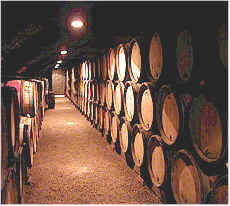
          The handpicked Chardonnay grapes are carefully sorted and destemmed, then pressed slowly and gently (less than 2 bars for less than 2 hours) with a Bucher pneumatic press. The must is then lightly dosed (less than 5 gm/HL) with sulphur, and allowed to settle for 12-24 hours, depending on the vintage. After cooling to 12-14°C., the must is fermented in oak barrels (100% new for the Premiers Crus), where the new wine undergoes malolactic fermentation and rests on its lees for the next 6 months in Lafon’s famously cool cellars. Batonnage  (stirring of   

Lafon's cool, deep cellars are among the best in Burgundy

the lees) is employed during the first part of this period, although the frequency of batonnage has decreased over the years. During the spring, the wines are racked into tank and assembled; importantly, the fine lees are retained. The assembled wine is then gravity-fed into mature casks where the wine ages for an additional 12 months, after which it is racked off the lees. The wines are finally bottled 20-24 months after harvest.

Read Full Post »


One of the most durable images of the Burgundian is the laconic peasant, face deeply etched and hands callused by years of exposure to the elements, beret akimbo, and a Gauloise à la Bogart. His education has been assimilated from generations of winemakers, and his worldview has remained congruent with the medieval Duchy of Burgundy. As compelling and charming as this iconic image may be, the reality is often strikingly different.    

The Domaine de l’Arlot, which is financed and controlled by the international financial services company AXA, stands as testimony that world class Burgundy does not invariably require the  
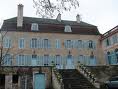
Domaine de l'Arlot

enduring stewardship of a single family, toiling in the vineyards and cuverie with techniques passed on from father to son. A well-advised and skillfully-led corporation can in fact bring in a professional overseer and produce superb Pinot Noir that faithfully manifests its terroir.    

The Domaine surrounds a château constructed in the 17th century from hewn Premeaux limestone. With adjoining vineyards and gardens, the château was  acquired and restored by Jean-Charles Viénot in the late 17th Century. His son François Viénot erected a surrounding stone wall, adopted the name of the l’Arlot stream, and the Clos de l’Arlot  was born. Maison Jules Belin, one of Burgundy’s most prominent 19th century négotiants, acquired the property in 1891, at which time it also bought the Clos-des-Forêts and the Clos de Chapeau. The Maison’s fortunes declined through the twentieth century and the estate fell gradually into disrepair.    

In 1987, the able head of AXA, Claude Bebéar, learned that Clos de l’Arlot and surrounding vineyards were available, and he moved quickly to acquire them. To spearhead the operation of the properties, newly baptized as the Domaine de l’Arlot,   Bebéar selected Jean-Pierre de Smet.    

De Smet was English-born and raised in Nice. Trained as an accountant, he set off as a young man for New Caledonia where he ran a business and    

Founding Winemaker, Jean-Pierre de Smet

 indulged his love for sailing. On a whim which was to change his life, Jean-Pierre spent 1977 in Burgundy with his friend Jacques Seysses at Domaine Dujac. He thereafter trained at the University of Dijon and continued assisting Seysses at Dujac for nearly a decade until, in 1987, the call came from another friend, Claude Bebéar.    

The estate acquired from Maison Belin consisted of 13 hectares, 7.1 hectares of the monopole Premier Cru Clos des Forêts-Saint-Georges, all planted in Pinot Noir; 4 hectares of the monopole Premier Cru Clos de l’Arlot, planted half with Pinot Noir and less than half with Chardonnay (the remaining fraction is planted with Pinot Beurot); and 1.8 hectares of Côte-de-Nuits Villages, Clos du Chapeau. AXA and De Smet have since added a couple of other small parcels, 25 ares of Grand Cru Romanée-St-Vivant and 85 ares of Premier Cru Vosne-Romanée, Les Suchots.    

Jean-Pierre subsequently brought in Lise Judet as co-gerante and Oliver Leriche as his technical director to supervise the making of the wine. The new regime transformed the viticulture from prevailing commercial practices to a more organic approach. They ceased using herbicides in favor of manual ploughing, and replaced insecticides with natural treatments. At present, viticulture is completely organic with a strong biodynamic orientation.    

Yields of the Pinot Noir are kept low, with a yield of 35 hl/ha on average, through a system of severe pruning as well as by using only compost to fertilize. At harvest, the grapes are handpicked into small baskets and then rigorously sorted in the vineyards to remove any imperfect bunches. The whole bunches are then rushed to the cuverie where, after another triage and little or no de-stemming, the bunches are vatted and allowed to cool gently.  The free run juice is allowed to begin fermenting with the resultant carbon dioxide retarding oxidation of the whole grapes, which themselves macerate slowly for 2-3 days before natural fermentation begins. According to    

Olivier Leriche

Leriche, this process breaks down the grapes, and helps extract a maximum of color, complexity and aroma. Fermentation temperatures are naturally maintained below 32° C.    

The cuvaison lasts between two and three weeks. This wine is then racked and some press wine may be added if needed for structure. After a one day débourbage, the wine is moved into oak casks (40% new for the Premier Cru), where it undergoes malo and rests on its lees in a cool cellar for 15-18 months. Generally, the wine is racked only twice before it is lightly fined (with egg whites) and bottled without filtration.    

The white wine, which comes from a section of the Clos de l’Arlot, is made mostly from old vine Chardonnay but also includes some rare Pinot Beurot. White wine in the Côte de Nuits is unusual, even more so when it comes from a Premier Cru vineyard. As with the Pinot Noir, the white grapes are fermented in whole clusters. After pressing, the must is cooled and, following débourbage, is racked into a tank (to retard oxidation) until fermentation begins. It is then placed into 25% new oak where it rests for about a year. Before bottling, it is lightly fined and filtered.

Read Full Post »


           Meursault is a wine appellation that includes some of the finest white French Burgundy. Wine so labeled must come from vines planted in the commune of Meursault situated in the Côte de Beaune region of the Côte d’Or department of Burgundy in eastern France.       

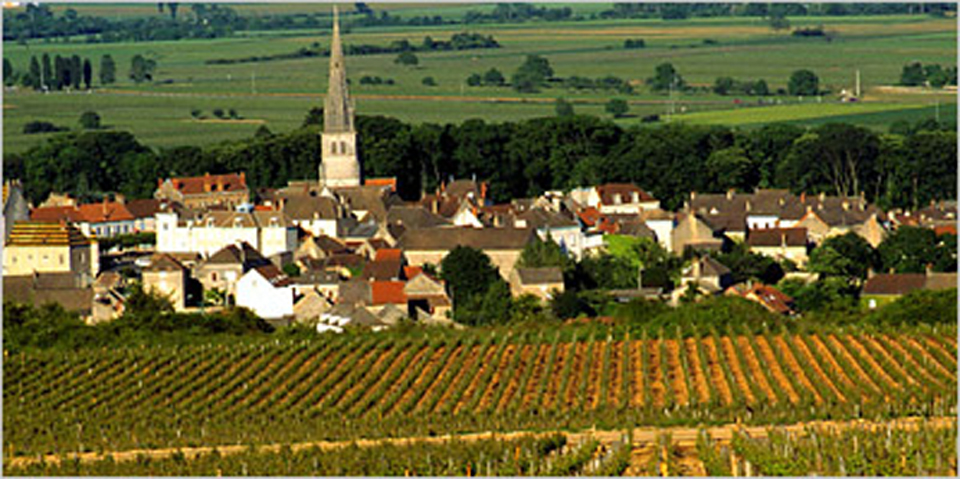
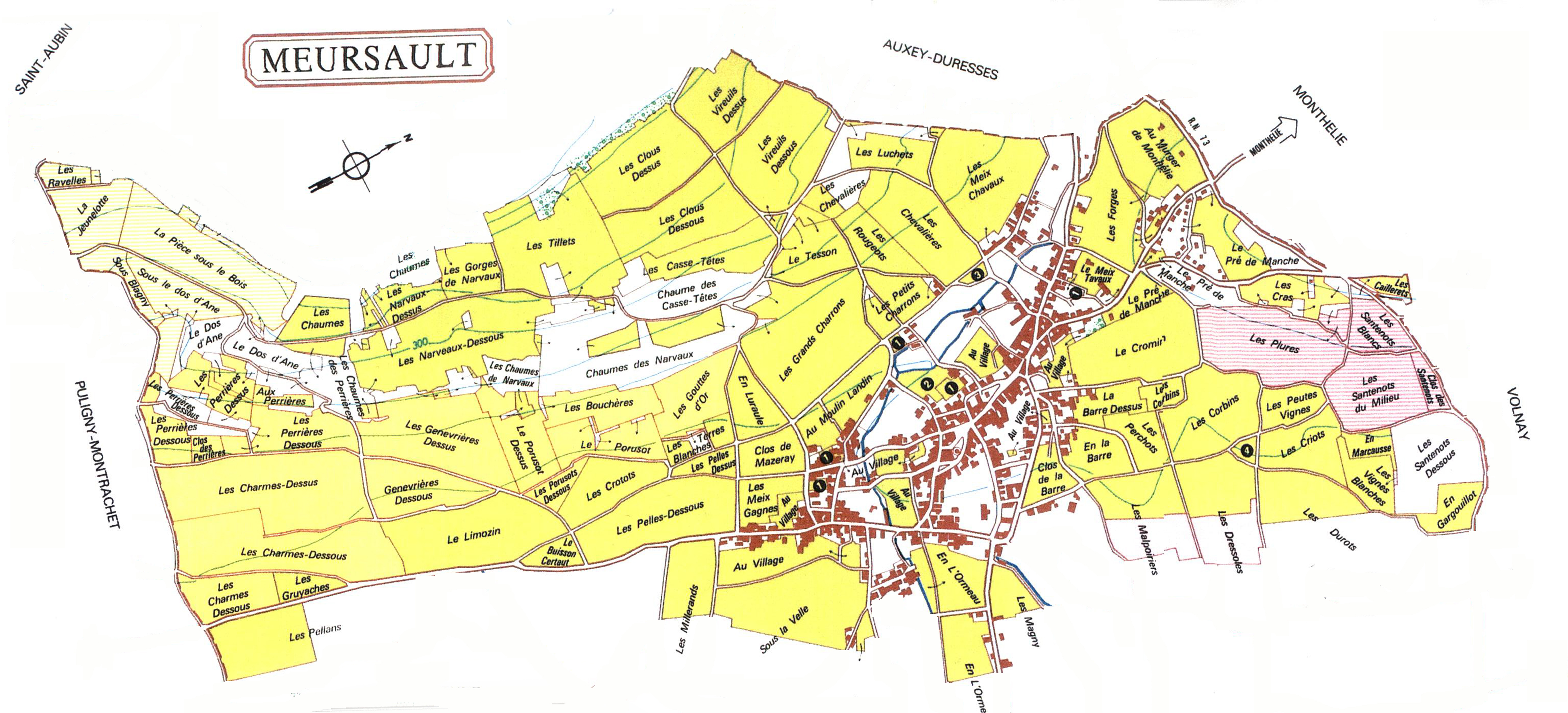
           The commune of Meursault, which extends south from Volnay, and immediately north of Puligny-Montrachet,  is the largest white wine producing area of the Côte-de- Beaune. To the northwest and north-northwest of Meursault are found Auxey-Duresses and Monthélie; toward the northeast is Volnay.      

          Meursault is the social and financial center of that portion of the Côte-de- Beaune referred to as the “Côte des Blancs” on account of the preeminent quality and reputation of its white wines. Meursault, Chassagne and Puligny comprise this part of the Côte-de-Beaune that is almost universally acknowledged as producing the finest Chardonnay-based wines in the world.      

            The suggestion, not infrequently made, that the name Meursault derives from the Latin for “mouse jump” (muris saltus) is risible at best, most likely the idle conjecture or schoolboy humor of a bored Latin student from a rival village.  Though etymological conjectures are always problematic, Meursault far likelier derives from the Celtic mare + saulis, or swamp willow (modern Fr. saule de marais). The lower part of the village is quite flat although today, fortunately, is quite dry.      

          The vineyards of Meursault occupy 436.82 hectares, of which 304.94 produce village-level Meursault. Many of these village-level wines boast well-known lieux-dits, and produce wines that rival many premiers crus. Best known perhaps are Lafon’s Clos de la Barre and Desirée, but other worthies include Les Tessons, Les Narvaux, Les Casse-Têtes and Les Clous.      

          While there is no grand cru, there are 131.88 hectares  of Premier Cru Meursault divided among different climats, the best known of which are Les Perrières (13.72 hectares ), Les Genevrières (16.48 hectares ), Les Charmes (31.12 hectares ), Les Poruzots (11.43 hectares ) and Les Gouttes d’Or (5.33 hectares ).      

          The commune of Meursault is roughly fish-shaped, with the head pointing northeast toward Volnay and the tail abutting Puligny-Montrachet. The town of Meursault bifurcates the fish just behind the head. The “fishhead” section, northeast of the village, is geologically and viticulturally a continuation of Volnay and Monthelie. The soil is comprised of a mixture of clay, pebbles and iron-rich scree over a base of Bathonian limestone. Most of the best wine produced from this sector is red. Since Meursault has long been renowned for its white wines, and since neighboring Volnay once produced the most  sought-after of reds, the vignerons of the fishhead sector won the right to sell their red wine as Volnay even though their vines are situate in Meursault. The best known vineyard here is Santenots.      

Meursault: fish-shaped      

          South of the village the geology changes markedly. Here the vineyards are spread out over gentle slopes whose easterly exposure, along with an abundance of Bathonian and Callovian limestone and white marl create an ideal environment for Chardonnay. Up slope toward Auxey-Duresses, the soil becomes increasingly thin, covered with scree and underlain with friable schiste. The finest terroirs in this sector, and the location of the Premiers Crus, are found in a band running parallel to the RN 74, in the middle third of the “fish”, extending from the tail to approximately the center.      

"I would not wish my Creator to see me grimace at the moment of Communion."

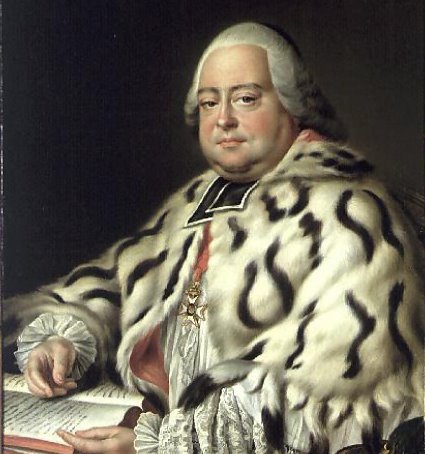
           Simultaneously opulent, subtle and delicate, Meursault matures slowly over a long period of time. Cardinal de Bernis, Louis XIV’s ambassador at the Holy See, always took care to celebrate mass with a Meursault, lest his Creator witness him wince during Holy Communion.  “I would not wish my Creator to see me grimace at the moment of Communion.”            The best-regarded sources of Meursault include Patrick Javillier, Dominique Lafon, François Mikulski, and Jean-Marc Roulot.

Read Full Post »


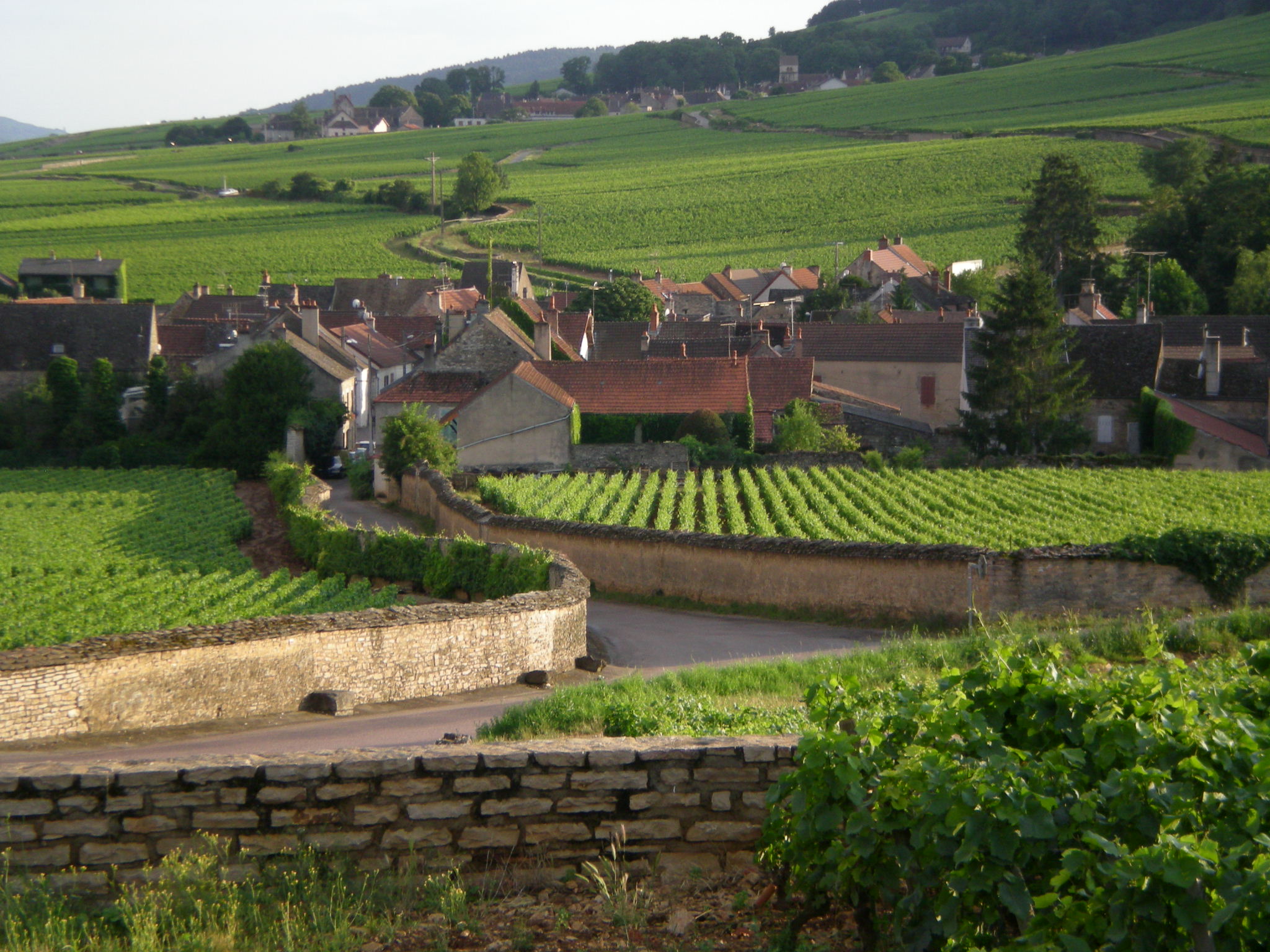
Pommard is a wine appellation that produces excellent red Burgundy. Wine so labeled must come from Pinot Noir vines planted in the commune of Pommard situated in the Côte-de-Beaune region of the Cote d’Or department of Burgundy in eastern France.    

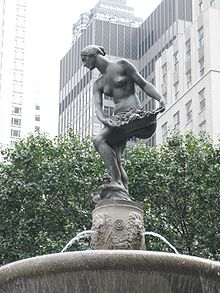
South of Beaune are found the two communes, Pommard and Volnay, whose wines (apart from the Grands Crus of Corton) comprise the finest red wines of the Côte-de-Beaune.  The name Pommard, by tradition, derives from Pomona, the Roman goddess of fruit trees and orchards, to whom early Gauls dedicated a temple on the site. This is the same goddess Pomona who    

The goddess Pomona

appears in full golden mufti on the Great Seal of the City of Los Angeles and whose bare pulchritude is captured by a demure statue now situate in the fountain in front of the Plaza Hotel in New York City.    

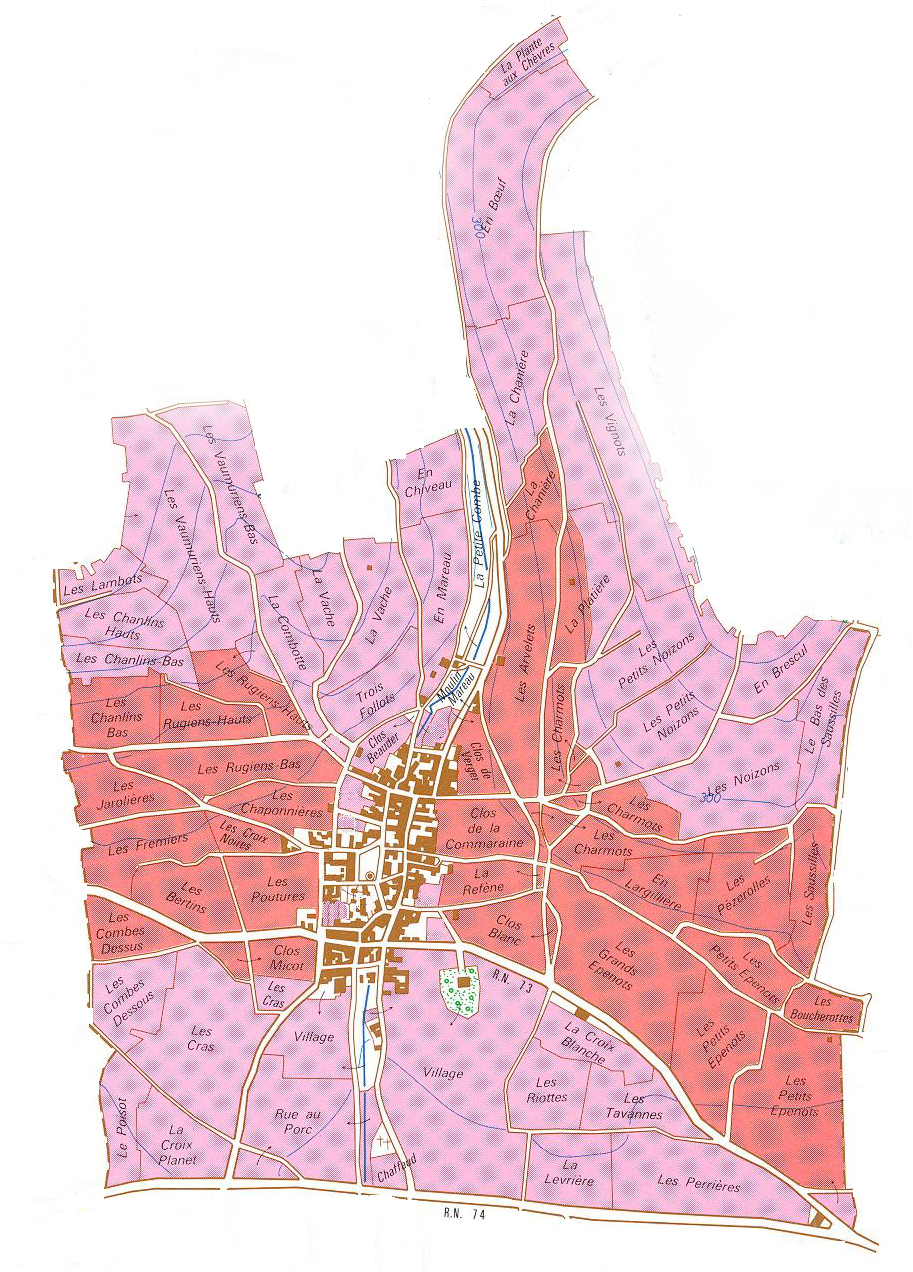
The commune of Pommard lies immediately adjacent to Beaune, and begins at the point where the Route forks into the Autun Road (RN 73) and the RN 74. Pommard is generally square-shaped with a center band, running more or less north-south, containing the 24 Premier Cru parcels totalling 125.19 hectares,  and 211.63 hectares of village-level Pommard. Total production averages around 13,532 hectoliters of wine per year, entirely red. There are presently no Grands Crus although Rugiens-Bas is expected to be promoted and Clos des Epeneaux would also be deserving.    

The prime vineyards in Pommard are generally thought to be located either on the Beaune side, where are found Les Pézerolles and Les Epenots; or to the south of the village, notably Rugiens-Bas. Interestingly, these two sections produce wines of distinct contrast. The stonier, better-drained soils of Les Pézerolles and Les Epenots produced finer, more delicate wines, whereas the iron-rich, clay soil of Rugiens-Bas produces more powerful and richer wines.    

Pommard

The vineyards of Pommard generally face south and southeast. The soil is somewhat varied in the commune, although there prevails generally a subsoil base Argovian limestone with an admixture of ferrous clay and marl. The thinner and rockier soils are found, not surprisingly, on the slopes above the city toward Beaune; and these give way to increasingly ferrous clay soils as the slope continues downward toward Volnay. Only in the area above the Epenots wall, along the Autun Road, is there much calcareous debris and pebbles.    

Among the finest producers of Pommard are Domaine de Montille and Comte Armand (Clos des Epeneaux).

Read Full Post »

« Newer Posts - Older Posts »